TOCA Talk Summer 2026
TOCA Talk is proudly sponsored by EnP and Advanced Turf Solutions.

EnP has been Engineering Optimal Plant Health™ for nearly 30 years, manufacturing specialty fertilizers
under two brands: Foliar-Pak, and Age Old Nutrients.

Advanced Turf Solutions (ATS) is a green industry distributor that provides fertilizer, pesticides, grass seed, ice melt, and
more to professionals in the golf, lawn care, and sports turf markets.
Because EnP and ATS professionals believe that collaboration and the exchange of ideas are essential for innovation, they are proud to support the Turf and Ornamental Communicators Association (TOCA).
Thank you, members of the Turf and Ornamental Communicators Association, for supporting this industry through your information, education, and outreach.
President’s Message
Putting down roots in TOCA
By Scott Covelli, TOCA President
Hello, TOCA crew!
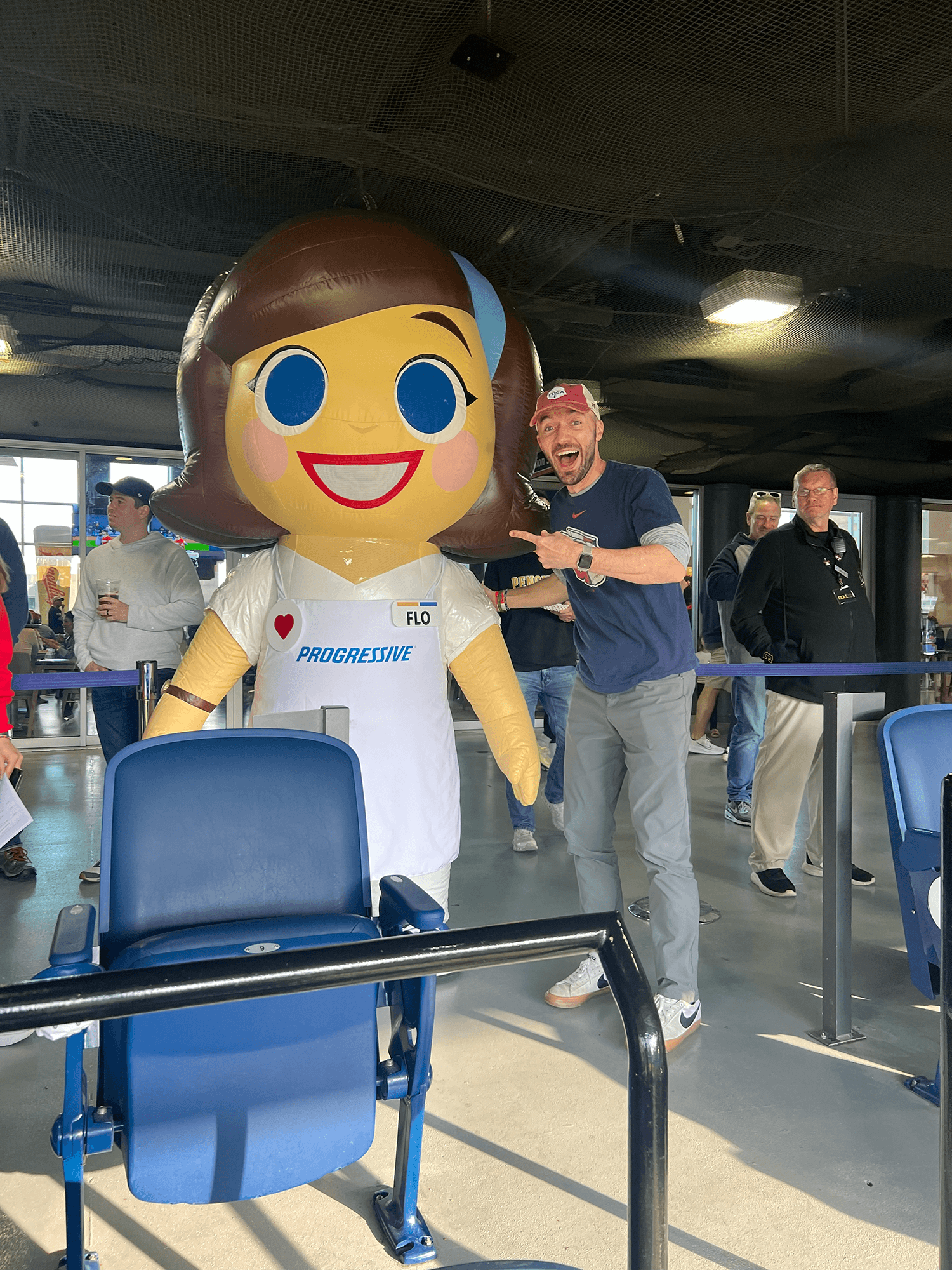
Scott Covelli, TOCA President and Flo
If you were able to join us in Cleveland last month for our annual meeting, I hope you all made it home safely and have been able to get back to your routine. It was a special annual meeting full of important insights and fond memories. Just to name a few, here are some highlights:
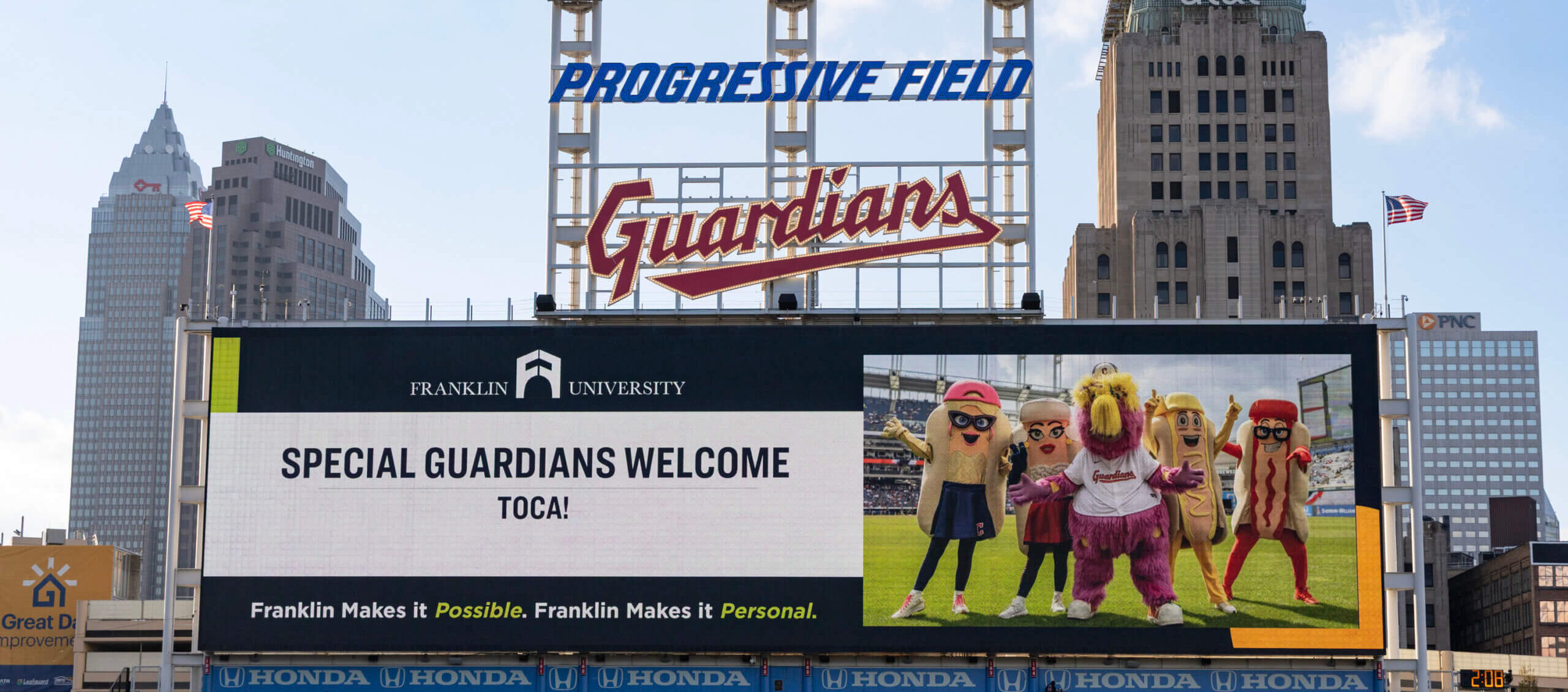
- A beautiful night at the Guardians game – and Travis Bazzana’s first Major League Baseball game – despite the loss. Thank you for sponsoring such a memorable night, Hunter Industries!
- Two excellent panel discussions from end users and publishers, giving us a valuable glimpse of the challenges in our industries.
- An eye-opening presentation at the Cleveland Metroparks Zoo and breathtaking interactions with tigers, red pandas, wolves and more.
- Muddy but meaningful volunteer work with Project Evergreen at Helen Simpson park, where we edged garden beds, planted flowers, picked up sticks and pulled weeds to beautify the neighborhood.
- Thoughtful presentations on email marketing and video content that sent us home with new tools and ideas to explore.
- A memorable banquet with dozens of award winners and two worthy Hall of Fame inductees in Russ Warner and David Cassidy.
This annual meeting – my 10th – stood out to me for a few reasons. First, my dad grew up in an eastern suburb of Cleveland and I spent my childhood visiting each year around the holidays. (I grew up in the Chicago area.) So, it’s always been a fun coincidence that so many of our TOCA organizations are based in Cleveland.
In fact, because we had so many local attendees, that meant more people got the opportunity to experience the TOCA Annual Meeting for the first time. We’ve always said that the camaraderie and unique positive atmosphere of TOCA is impossible to explain, and people just need to experience it.
And as we come out of the annual meeting – whether you were there or not – it’s natural to ask yourself, “what do we do now?” It’s a long way until our 2027 meeting at Lied Lodge in Nebraska City, but there are several ways to get involved now:
- Join a committee! We have several committees looking for new members:
- Membership: Help grow membership and attendance at the annual meeting
- Professional development: Organize webinars and other content for TOCA members
- Communications: Provide ideas for ongoing social media content for TOCA
- Annual meeting planning: Researching and organizing speakers, events and programming for the 2027 annual meeting
- Tell your teams and clients! TOCA grows both with new organizations joining, but also with teams getting their coworkers involved. Also, if you have clients or industry partners who want to get in front of the most influential group in the green industry, talk to them about sponsoring TOCA!
- Start thinking about awards! I’m sure you’ve already created some award-worthy work this year. Make a mental note, or a real note, to select pieces to submit to the 2027 Communications Contest.
- Mark your calendars for Nebraska and Sonoma! Our next two annual meetings will be at Lied Lodge in Nebraska City, Neb., from April 27-29, 2027, and at the Hyatt Regency Sonoma Wine Country in Santa Rosa, Calif., the week of April 24, 2028.
Once again, I’m so grateful for all of those who helped plan, participate and attend the annual meeting in Cleveland this year. Special thanks go to our hosts, sponsors and first-timers. It was another uplifting and fruitful experience, and I hope to see you all soon.
Have a wonderful summer!
TOCA recognizes outstanding communication tactics, projects
xxx contestants submitted xxx entries for the 2026 TOCA Communications Awards contest. Judges awarded first-place awards to xx entries. Ten entries sorted themselves to the top as this year’s Gardner Award winners. Here are this year’s most outstanding TOCA Communications Award entries.
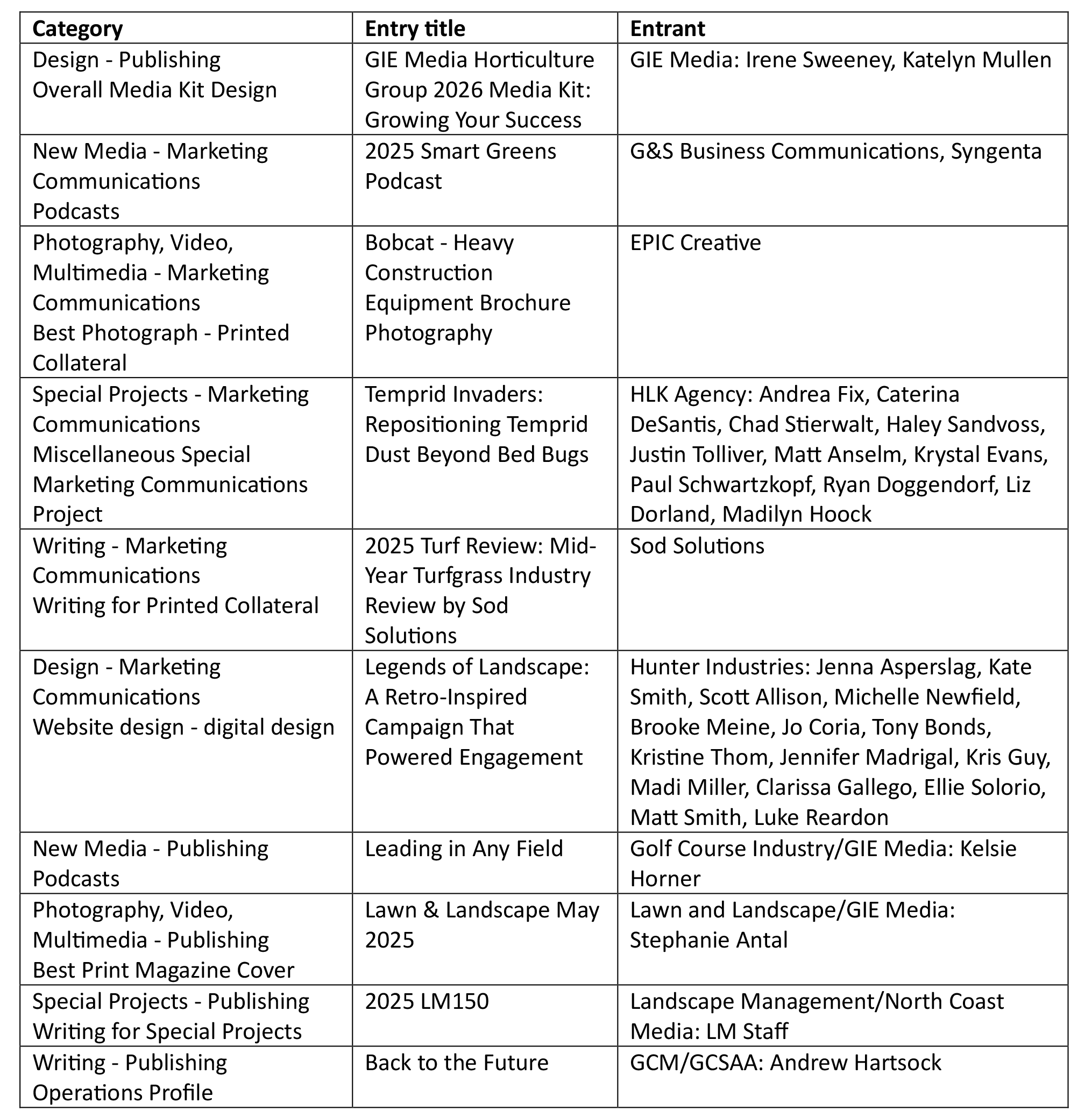
To view the 2026 TOCA Awards presentation, go to: https://www.toca.org/contest-awards/communication-awards.
In late 2026, TOCA will open its entry portal for the 2027 TOCA Communications Awards. Watch your email inbox for the official launch. Entries will be due Feb. 28, 2027. In the meantime, keep track of your potential award-winning work and be ready for next year’s TOCA Communications Awards program and get the recognition you deserve!
Lauren McCarty accepts TOCA internship
 My name is Lauren McCarty and I will be participating in the internship program hosted by North Coast Media, funded through the TOCA Foundation by Gardner & Gardner Communications and Jose Milan. I am thrilled to be a part of this program. I just completed my undergraduate studies and cannot wait to work in a professional environment with a wonderful team.
As a communication student at the University of Dayton (UD), I learned many valuable skills in reaching people. I concentrated in journalism during my undergraduate program. In that course of study, I learned to connect with others in a meaningful way using multimedia tools.
This opportunity with TOCA is very exciting to me because of the possibilities that it offers. I have a lot to learn and I know working with TOCA and North Coast Media will give me the chance to develop my abilities in marketing and communication. The turf and ornamental industry is new to me. It interests me particularly because I love to golf and garden.
During my undergraduate program, I was president of the UD Society of Professional Journalists Chapter. Also, I was a Sigma Kappa member and the arts and entertainment editor for our school newspaper. Plus, I worked at our radio station and UD College of Arts and Sciences Newsroom. In addition to gardening and golfing, I love art, music and entertainment. I practice yoga and love spending time with my family and friends.
Thank you so much to the TOCA Foundation, Gardner & Gardner, Jose Milan and North Coast Media. I am incredibly grateful for this opportunity. I can’t wait to get started.
Newsletters: The cockroach of the internet?
By Jill Odom, National Association of Landscape Professionals
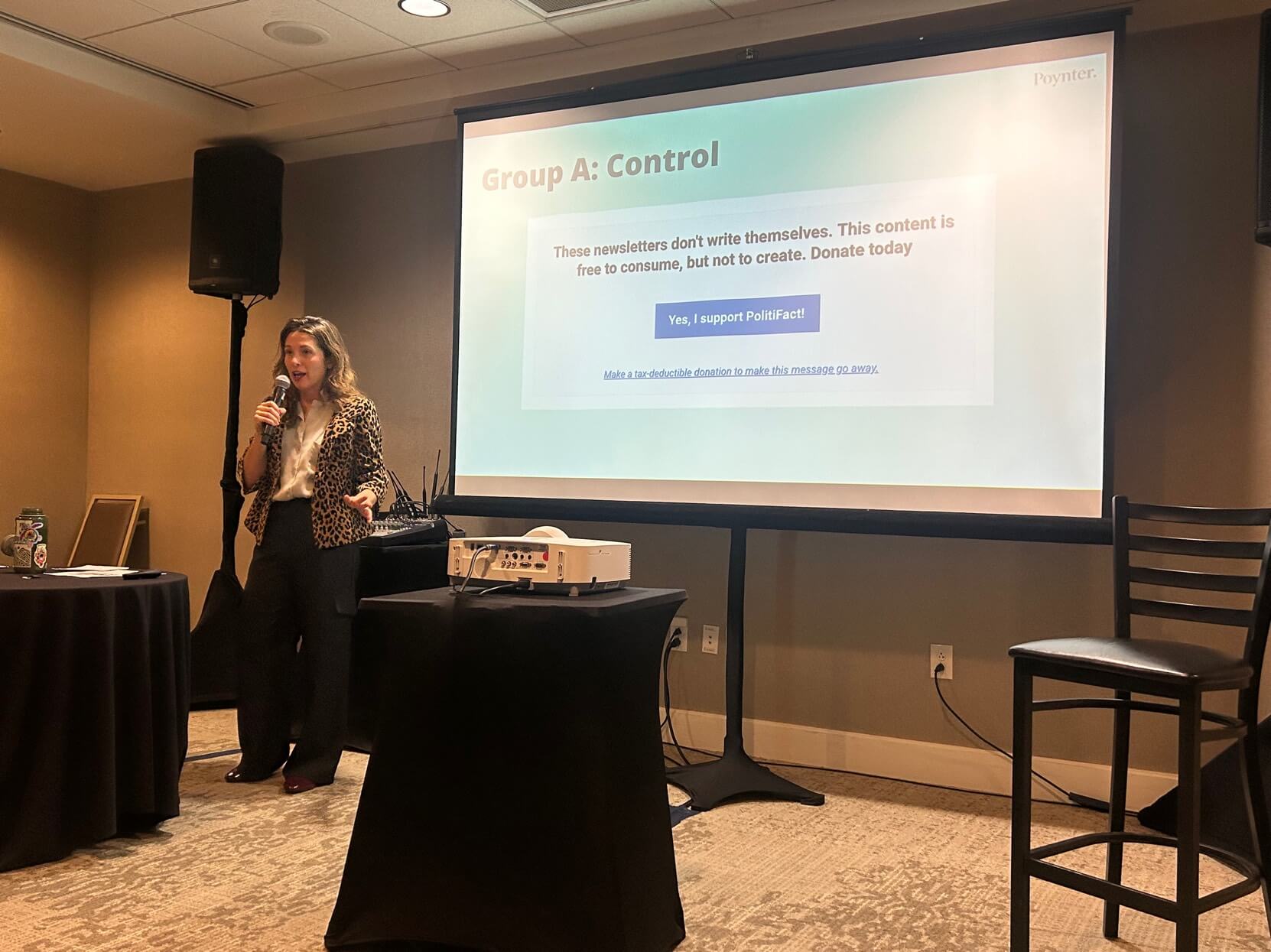
Josie Hollingsworth, Poynter and PolitiFact
A common fear with the explosion of artificial intelligence (AI) is whether email newsletters are doomed to follow the fate of the dinosaurs. But, Josie Hollingsworth, with Poynter and PolitiFact, argued during her keynote presentation, instead, that newsletters are more like the cockroaches of the internet and are here to stay – despite the changes disrupting the space currently.
Like cockroaches, newsletters are deeply misunderstood and serve a larger purpose beyond being an annoying addition to your inbox. They help readers learn about what’s going on in the world by breaking down topics, similar to how cockroaches break down organic matter.
Heck, if you’re reading TOCA Talk, that’s just one example of a newsletter that is bringing value to your life.
Where are newsletters headed?
While newsletters aren’t going away anytime soon, AI will push content creators to create newsletters that provide value to the reader. People want content that has a distinct voice and personality, provides something essential and offers expertise and insights.
If you want your newsletters to be bulletproof in the age of AI, think about how you can become your audience’s favorite email to read. Go beyond a brand and cultivate a specific person they can connect with – whether that be the leader of your organization or the individual creating the content.
One possible option is making your newsletter feel like a private clubhouse where subscribers feel like insiders.
Hollingsworth shared a case study of how communicating the value their organization provides boosted the perception of their brand. She explained that including trust language in your newsletter can be particularly impactful.
Subject line best practices
Subject lines are essential to getting subscribers to open your newsletter as it answers the questions, “Who is this from?” and “Why should I open it?”
While there is no one-size-fits-all method for creating the perfect subject line, Hollingsworth encourages steering clear of deceptive tactics and overfamiliar tricks, as this can frustrate readers and cause them to mark your newsletter as spam.
Instead, your subject lines should set the tone, be direct and deliver on your promise. Additionally, don’t feel like you’re unable to use certain words considered “spammy” – as long as you follow through with what is offered.
Don’t forget preheader text because this can provide additional context that may prompt the recipient to open your newsletter. Using preheader text increases open rates by 15%.
Aim for 45 characters for your subject line and 100 characters for your preheader text. Longer subject lines can work at times, if done properly.
Take advantage of A/B testing to fine-tune what tactics work with your audience when it comes to subject lines. You’ll need about 5,000 subscribers for statistical significance with your A/B tests. You may be tempted to only do A/B tests on emails with low stakes, but Hollingsworth noted testing on high-impact emails gets good engagement.
Creating a welcome series
Whether you’re getting a newsletter off the ground or have had one for years, one tactic that can be particularly useful for building a connection with your audience is an automated welcome series that includes these three messages.
- The Handshake – tells subscribers what to expect from your newsletter
- The Secret – uses value language to explain why you’re different and worthwhile
- The Ask – convert momentum into an action by asking a question, such as “Where are you struggling in your business?” or prompting the reader to click here for more information.
By asking your subscribers questions in the welcome series, you can then use this information to better serve them and practice segmentation.
Hollingsworth pointed out that the more you drill down into your audience, the better monetization and content opportunities you have. It is better to have 1,000 die-hard fans than 10,000 non-loyal readers.
Sending out a re-engagement series can also prompt readers to share what they’d like to see more of or unsubscribe, which is a win-win, as it will increase your engagement or improve your deliverability.
When considering your welcome series messaging, one helpful exercise is to develop six trust statements you’d share with new subscribers that you want readers to know about your organization. Also, ask yourself, “What are six things you’d want to know about your reader?”
When you’re armed with this information, it becomes far easier to shape your newsletter into a touchpoint that conveys true value.
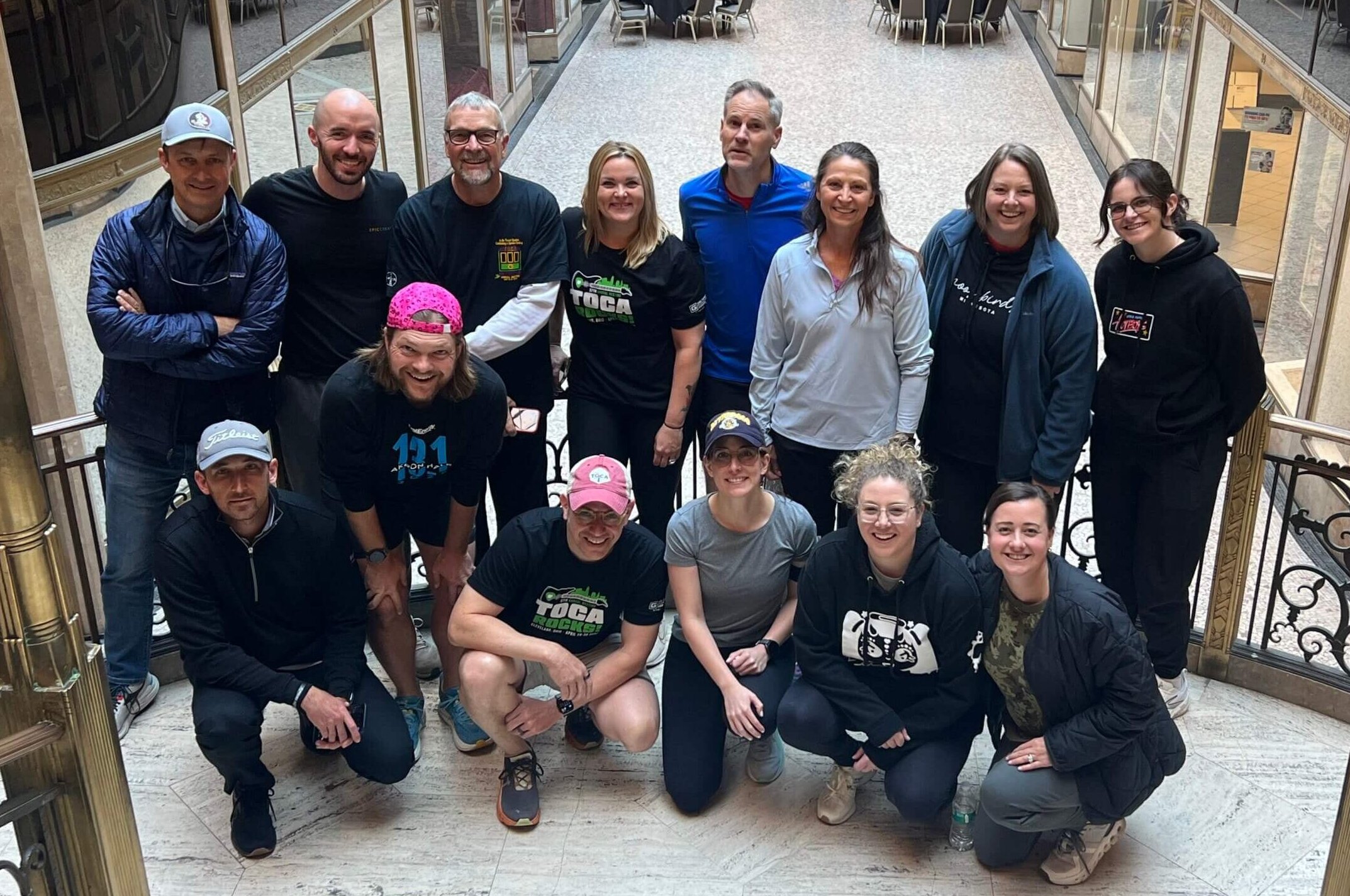
TOCA Trotters didn’t miss their chance to go running while they were in Cleveland!
TOCA 2026 Annual Meeting: Publisher panel blog
By Maurice Jones and Jenna Schindo, E&V Strategic Communications
Last month’s Turf and Ornamental Communicators Association (TOCA) Annual Meeting gave attendees the opportunity to hear directly from some of the green industry’s leading publishers during the “Green Industry Publisher Panel.” This discussion featured insights on the evolving state of journalism, audience engagement and content strategy in the green industry. From the importance of print editions to the growing influence of artificial intelligence (AI) and changing reader habits, the conversation highlighted challenges and opportunities shaping today’s media landscape.
On the panel moderated by TOCA Board President Scott Covelli, meeting attendees heard from Bob West (Meister Media Worldwide), Dave Szy (GIE Media), Jill Odom (National Association of Landscape Professionals) and Seth Jones (North Coast Media).
Where audiences are engaged
The panel kicked off with a discussion on audience reach. Even though digital platforms are becoming more important, the panelists agreed that print publications are still a crucial part of engagement in the green industry. Jones noted that meaningful print products still resonate with readers, especially when the content is thoughtful and intentional. Odom added that email newsletters continue to gain momentum, citing strong open and click-through rates, while reposted articles on LinkedIn also generate consistent participation and conversation.
While print is still relevant for the green industry, it is clear that digital platforms are important for discovery. Szy explained how he noticed younger audiences often come across brands and their content through social media first before eventually connecting with the print publications. All the panelists agreed that relying on one channel is no longer an option and brands need to use a mix of print, digital and in-person touchpoints to maintain connection with their content.
Live events also emerged as one of the strongest drivers of audience engagement. Szy mentioned that GIE has had success launching events in the landscape space. Several panelists noted that face-to-face networking opportunities continue to grow in value across the industry. Whether through conferences, field days or trade shows, attendees are increasingly looking for opportunities to connect directly with peers and industry experts.
Print media advantages
Despite the rapid pace of digital communications, the panelists agreed that print continues to offer several advantages that digital platforms struggle to replicate. One of the biggest factors discussed was screen fatigue. Jones pointed to the constant presence of phones, emails and notifications in daily life, noting that readers increasingly appreciate the focused experience that print provides.
Trust was another recurring theme throughout the conversation. West explained that readers often associate print publications with credibility and authority. Unlike digital content, which can feel fleeting or interruptive, print creates a more intentional reading experience where audiences spend uninterrupted time with the material. Physical magazines also provide a sense of ownership that digital content often lacks. Readers can save issues, share them with coworkers and return to articles later when they have more time to engage with the content.
The panelists acknowledged the challenge of shrinking attention spans. Odom noted that striking the right balance in content length has become increasingly difficult, with shorter pieces sometimes lacking depth and longer stories risk losing reader attention. As a result, publishers are continuing to evaluate how different formats can support changing reader habits without sacrificing quality journalism.
Demographic targeting strategies
Panelists discussed how audience segmentation strategies are evolving, noting that revenue-based targeting can often be more effective than relying solely on age demographics. In the communications world, age is often treated as a primary audience marker, but this insight challenges us to look at the bigger picture, especially when it comes to shaping content around audience priorities and business realities. For example, companies with less than $10 million in revenue face very different challenges and goals than companies generating $100 million, which means their content needs and interests differ as well.
Meeting audiences where they are is always top of mind. Along those lines, panelists noted that time-sensitive news is best shared digitally, where information can be distributed almost instantaneously. Evergreen content, such as thought leadership pieces or quarterly reports, is often better suited for print, where readers may spend more time engaging with the material.
Jones summed it up well when he said, “Know what you’re good at and focus on that.” In other words, don’t chase trends or platforms your team is not equipped to handle effectively. Let peers lead in the spaces they understand best and don’t be afraid to learn from them.
Editorial credibility
In today’s ever-changing media landscape, strong storytelling depends on strong credibility. Research-backed reporting and boots-on-the-ground coverage remain essential barometers of trust, while longevity and established relationships continue to shape how audiences evaluate the information they consume. A well-developed “Rolodex” of trusted sources never goes out of style; readers recognize and trust familiar voices, even when stories are told through member or stakeholder perspectives. That’s why the most compelling editorial storytelling is also rigorously sourced – drawing from multiple perspectives to ensure accuracy, balance and authenticity.
Maintaining that credibility also requires a clear separation between editorial content and advertising. Audiences expect transparency, so advertising clients should never influence editorial placement or appear on covers, and advertorials should always be clearly labeled when used.
The use of AI
AI emerged as a practical tool for improving efficiency without replacing the core responsibilities of journalism and communications work. Panelists pointed to transcription as one of the biggest day-to-day benefits, as it saves significant time and allows writers to focus more on writing, editing and shaping stories, rather than scrambling to capture notes during interviews.
Beyond transcription, AI can also support content organization and ideation. Panelists shared that it can be useful for creating outlines from multiple interviews, generating headline suggestions and even prompting critical-thinking questions when a writer feels stuck. While those headline ideas are not used without edits, they can help spark new angles or approaches during the creative process.
At the same time, source transparency remains essential. Some panelists noted the importance of asking sources directly whether they used AI to help craft their responses, while also documenting AI use internally for personal awareness and accountability. The consensus was that AI works best as a tool to enhance efficiency and creativity, not as a replacement for human judgment, reporting or editorial integrity.
Industry challenges
While the panelists remained optimistic about the future of industry media, they acknowledged that publishers are navigating significant challenges across both print and digital platforms. One of the largest concerns discussed was the steady decline in web traffic. West explained that AI-powered search results and summaries are increasingly reducing clicks to publisher websites, forcing media companies to rethink how digital content is monetized and measured.
Staffing and workload pressures were also recurring topics throughout the discussion. Odom shared that she produces more than 300 stories annually, while also supporting broader marketing and member communication efforts. Across the board, panelists emphasized that editorial teams are being asked to produce more content with fewer resources, making efficiency and prioritization increasingly important. Rising print costs continue to add another layer of complexity. Szy noted that postage and paper expenses have climbed significantly in recent years, forcing publishers to focus more heavily on quality circulation, rather than simply expanding distribution numbers.
As the discussion wrapped up, one theme remained consistent across every topic: relationships continue to drive the industry forward. Whether through trusted editorial sources, loyal readers or long-standing connections, the panelists emphasized the importance of keeping communications a two-way street. Audience engagement is no longer just about publishing content; it is about listening, responding and creating opportunities for meaningful dialogue across multiple platforms.
That relationship building becomes even more valuable in person. From trade shows and conferences to field days and networking events, face-to-face interaction continues to strengthen trust and community within the green industry. While digital tools and AI are changing how content is created and distributed, the panel reinforced that authentic human connection remains at the center of effective communication and storytelling.
Warm wishes and a warm welcome
By Kim Lux, GIE Media
Attendees at the Turf and Ornamental Communicators Association (TOCA) Annual Meeting in Cleveland this year heard first-hand how the green and golf industries are faring during a State of the Industry panel. The panel featured Ian Gallagher, director of operations at Mayfield Sand Ridge Club, Jerry Schill, president and co-owner of Schill Grounds Management, Jim Funai, assistant professor with Cuyahoga Community College, and Zane Raudenbush, turf and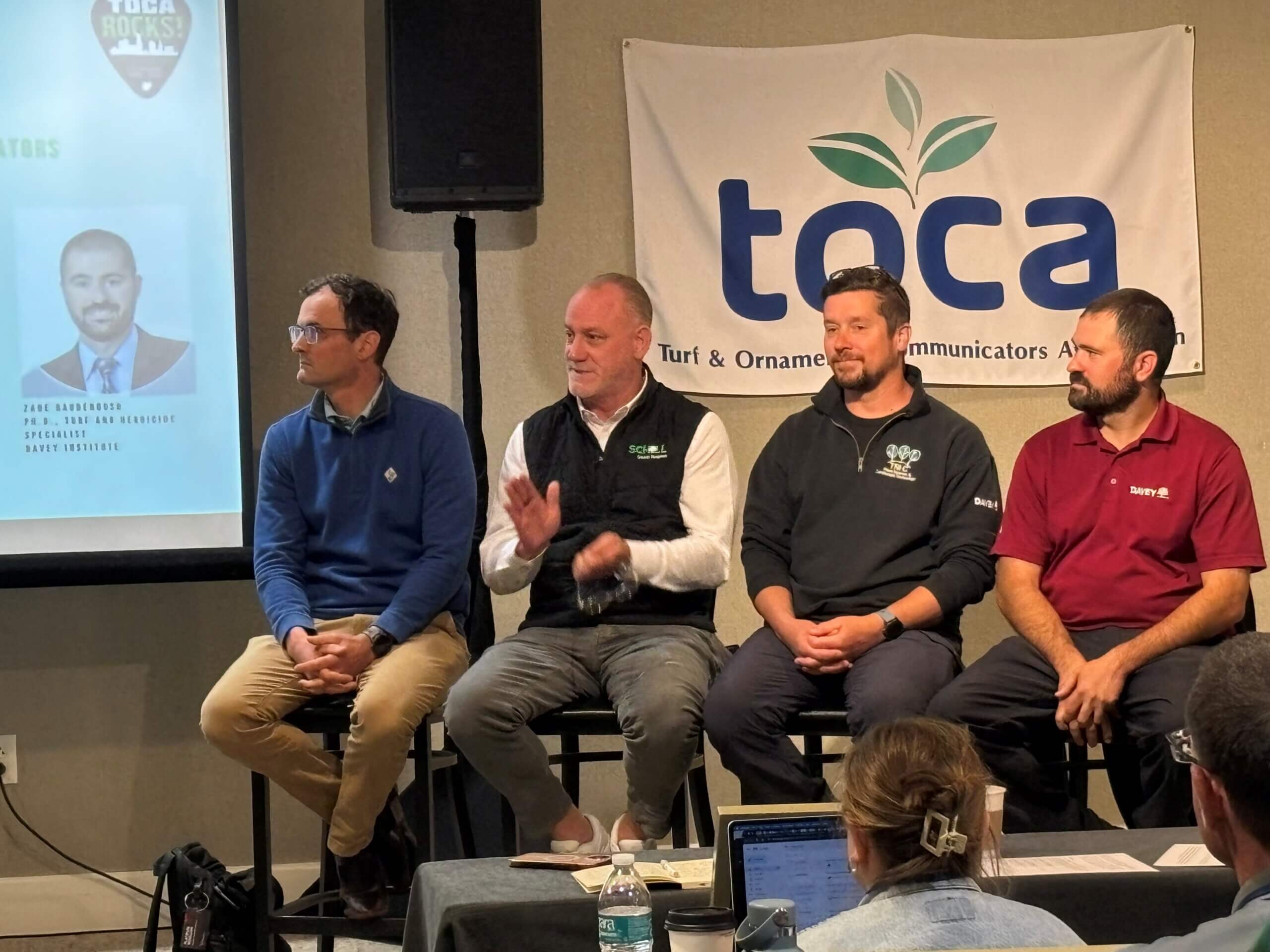 herbicide specialist with the Davey Institute.
“The level of professionalization the industry has seen over the past 15 years is really exciting,” Schill noted. “You’ve seen a lot of changes in the industry for the good; I’m really excited about the industry. There’s a ton of opportunity to continue to grow… I think the trades have gained momentum and that’s really exciting to me as well.
“We’re seeing a much smarter and much more professionalized industry,” he added. “We are dealing with an aging ownership group… so sometimes, they’re in a hurry to exit. From an M&A perspective, I’m excited about what we’re seeing because we want to partner with better businesses.”
Gallagher added the golf industry is optimistic as well – something he’s happy to see in the post-COVID era. “Golf is going very well right now,” Gallagher said. “We saw it heighten during COVID and I think people are more committed than I originally thought because we haven’t seen a drop off yet.”
Gallagher added that labor is even up in the golf industry – helping a long-standing challenge that the green industry is still facing.
While Funai is seeing a spike in those interested in horticulture, he noted it’s still not enough to fill all the holes throughout the industry.
“We’re (Cuyahoga Community College) one of the fastest-growing horticulture programs in the nation,” Funai said. “From the green industry standpoint, I can’t keep up with getting enough graduates out there – and there are so many opportunities available.”
Due to these opportunities, Funai strives to teach students all they need to know, so they’ll be in high demand when they enter the job market.
While a degree in turf or horticulture is still great, Gallagher said it’s not the end-all, be-all anymore.
“We don’t look so much for a turf degree anymore; we look for somebody who cares,” Gallagher said. “We can teach them what they need to know and they can go get that degree later down the road.”
Additionally, artificial intelligence (AI) was a topic of conversation among panelists. And while automation is great for running a more efficient business, none of them see AI replacing crews completely in the green or golf fields.
“I think our industry is strong and with AI there’s a lot of concern about what people’s jobs will look like… I think there’s not only operational prowess but a touch of art in what we do. There’s a lot of technology coming into the industry that will help us do our job even better,” Raudenbush said.
And while running to ChatGPT, or any kind of AI, is great in a pinch for a quick answer, panelists said nothing beats peer networking and collaboration.
“You can spend hours searching the internet, but one phone call can save you hours of angst,” Raudenbush said.
“I reach out to people for help; it’s the quickest way to learn, to grow and overcome,” Schill added. “One of the things I love about this industry is that it’s extremely open and everyone is willing to share.”
That collaboration expands into several of the industry’s biggest challenges. One example is pesticide use and the negative connotation around it.
“The pesticide thing is a huge one,” Funai said. “The thing is, without these chemicals, we all die. We couldn’t grow the amount of food we need. The messaging needs to be that there are people using these things responsibly, following the labels and following the law. We focus on that and that message doesn’t get out there very much,” he added.
Raudenbush said the same thing goes for smart water use. “Water is another one,” he noted. “There are a lot of ways to frame it to make people more comfortable and highlight the wins; but the opposition, they’re loud. You just have to highlight that these things aren’t as bad as they seem.”
That’s one reason why Funai said his students are so eager to study horticulture and help make a difference environmentally. “They know the environment is messed up, that we did it and that we can fix it,” Funai said. “And they’re motivated. They are well aware that they need to do something.”
Thank you Hunter Industries for sponsoring our trip to the ball game!
TOCA 2026: Why video content matters more than ever
By Valerie Smith, Sod Solutions
One of the most practical and widely relatable sessions at the 2026 TOCA Annual Meeting in Cleveland focused on a topic many businesses are actively trying to navigate: video content. During “How to Make the Most Out of Your Video Content,” presenters Alexander Garrett of GIE Media and Kevin Battistoni of Hunter Industries discussed how companies can create stronger, more effective video content – without needing large production budgets or dedicated media teams.
The session focused less on polished production quality and more on accessibility, consistency and communication. Rather than encouraging companies to create highly scripted marketing campaigns, the presenters emphasized the importance of producing content that feels useful, authentic and easy for audience engagement. In many cases, they noted, viewers respond more positively to videos that feel natural and relatable than to content that appears overly produced.
A major theme throughout the presentation was how quickly audiences consume information online. The presenters explained that viewers often decide within the first few seconds whether they want to continue watching a video, making those opening moments especially important. Because attention spans are short, businesses need to communicate value clearly and quickly.
To help attendees simplify the process, the speakers introduced a straightforward framework for creating effective videos:
- Hook
- Value
- Story
- Call to action
The “hook” is designed to capture attention immediately, while the rest of the structure helps keep content focused and purposeful. The presenters stressed that businesses should think carefully about what viewers are supposed to learn, feel or do after watching a video, rather than simply posting content without a clear goal.
Another major takeaway centered on efficiency and time management. During a live audience poll, many attendees identified lack of time as their biggest obstacle when it comes to creating video content. In response, the presenters recommended building multiple pieces of content from one core video, instead of constantly creating entirely new material. A single video, they explained, can often be repurposed into shorter clips, educational posts, quotes, behind-the-scenes footage and platform-specific edits for social media.
Artificial intelligence (AI) tools were also discussed as part of the evolving content landscape. Platforms, such as CapCut, ChatGPT and Opus Clip, and other editing tools were highlighted as ways to speed up editing, captioning, translation and content planning. The presenters framed AI less as a replacement for creativity and more as a practical tool that can reduce production barriers and make content creation more manageable for busy teams.
Accessibility and communication were additional points of discussion. Automatic captioning and multilingual translation tools can help companies connect more effectively with broader audiences, including Spanish-speaking professionals who make up a significant portion of the landscaping and irrigation industries.
The session also emphasized the growing importance of user-generated content and real-world footage. Videos filmed in the field, customer experiences, quick demonstrations and everyday crew moments often feel more trustworthy and engaging than highly polished advertisements. Throughout the presentation, the focus remained on authenticity, usefulness and consistency, rather than perfection.
Overall, the session reinforced that video is becoming an increasingly important communication tool across the industry. Businesses do not necessarily need expensive equipment or professional studios to create effective content. Instead, clear messaging, useful information and relatable storytelling are often what resonate most with audiences today.
TOCA visits Cleveland Metroparks Zoo during annual meeting
By Cecilia Johnson, Sod Solutions
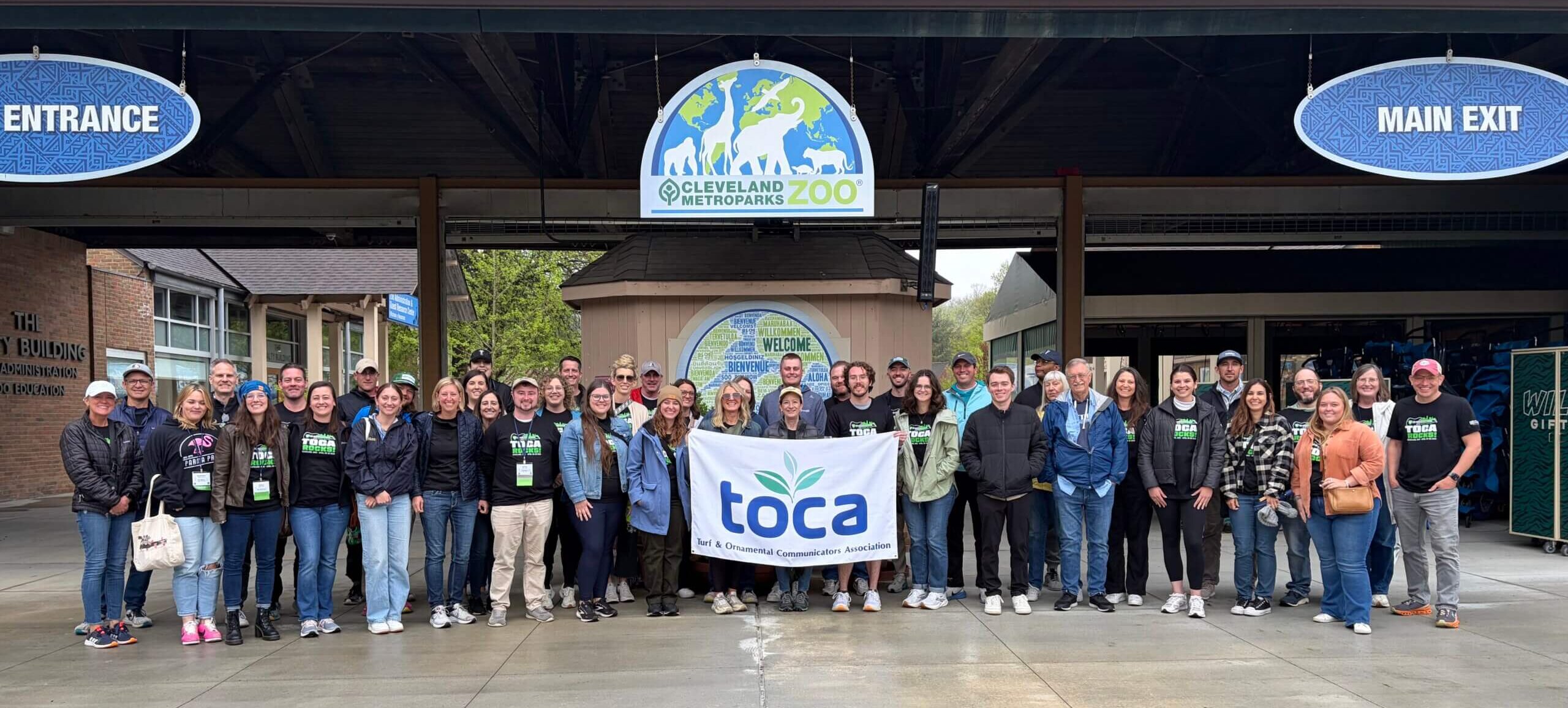
At the 37th Annual TOCA Annual Meeting in Cleveland, Wednesday’s schedule shifted from morning educational sessions and conference panel discussion at the hotel to an afternoon visit to Cleveland Metroparks Zoo. More than 40 conference attendees boarded the bus wearing their TOCA Rocks T-shirts, along with rain jackets, ponchos and umbrellas, as sunny weather from earlier in the week gave way to a rainy afternoon at the zoo.
After arriving, attendees gathered under covered awnings to enjoy boxed lunches from local deli Slyman’s before heading to the zoo’s Reinberger Education Center to hear from Leigh Anne Lomax, manager of horticulture and facilities.
Lomax shared an engaging presentation, highlighting how the zoo uses horticulture to connect people, plants and animals through immersive landscapes, animal habitats and enrichment programs that support animal health and well-being. Her passion for the work was evident as she discussed the care and planning involved in selecting plants and maintaining environments that contribute to the animals’ long-term success and quality of life.
Attendees learned about the horticulture operations behind the zoo’s 183-acre property, which welcomes more than 1.2 million visitors annually. A team of 12 full-time employees, including eight horticulture staff members and four landscape employees, maintains the diverse collection of landscapes, gardens and animal habitats across the property.
One of the biggest takeaways from the presentation was the close connection between horticulture and animal care. Lomax explained that every plant introduced into exhibits or animal spaces must first be researched for toxicity and safety, since many materials are eventually consumed or used for enrichment by the animals. More than 80 plant varieties are incorporated into enrichment programs throughout the zoo.
Lomax highlighted several examples, including eucalyptus for koalas, bamboo for red pandas and specialized ginger varieties for gorillas. The zoo’s gorilla diet program has since been adopted nationally by other zoological facilities. Wheatgrass is also grown for enrichment use with animals ranging from alligators to otters, while branches, deadfall and other natural materials are incorporated into habitats to encourage climbing, perching and natural behaviors.
Attendees also learned about the extensive seasonal color installations that help shape the visitor experience throughout the year. The zoo plants approximately 25,000 bulbs annually for spring tulip displays and installs nearly 3,000 summer annuals in the weeks leading up to Memorial Day. Many displays are maintained with minimal chemical inputs, with plant selections helping naturally suppress weeds and extend seasonal color. In the fall, approximately 1,500 mums and ornamental kale plants replace summer displays across the grounds.
Sustainability and conservation efforts are woven throughout the zoo’s horticulture program. Lomax discussed pollinator and wildlife gardens, monarch conservation initiatives and the zoo’s use of multiple milkweed species to support butterfly populations. Additional sustainability efforts include composting manure annually and using reclaimed water systems to support irrigation needs throughout the property. Cleveland Metroparks Zoo also maintains arboretum accreditation and continues incorporating electric equipment indoors to reduce fumes around animals and guests.
Following the presentation and audience questions, everyone gathered for a group photo and explored the zoo grounds and exhibits – despite the lingering rain. From flamingos, elephants, tigers and bears to immersive landscapes surrounding the animal habitats, the visit offered a firsthand look at how horticulture supports both conservation efforts and the overall guest experience at Cleveland Metroparks Zoo.
A special thanks goes to Leigh Anne Lomax and the Cleveland Metroparks Zoo team for hosting TOCA and providing an engaging behind-the-scenes look at the zoo’s horticulture operations.
Project EverGreen, TOCA, green industry partners refresh Helen Simpson Park in Cleveland
By Cindy Code, Project EverGreen
Green industry communications professionals from across the country came together on April 29 to revitalize Helen Simpson Park in Cleveland, demonstrating the power of collaboration, community stewardship and industry engagement.
Led by Project EverGreen, the community refresh project brought together volunteers and industry partners, including Yardmaster and Turf Pride Lawn Care, to enhance one of the valued green spaces near Cleveland’s Shaker Square neighborhood.
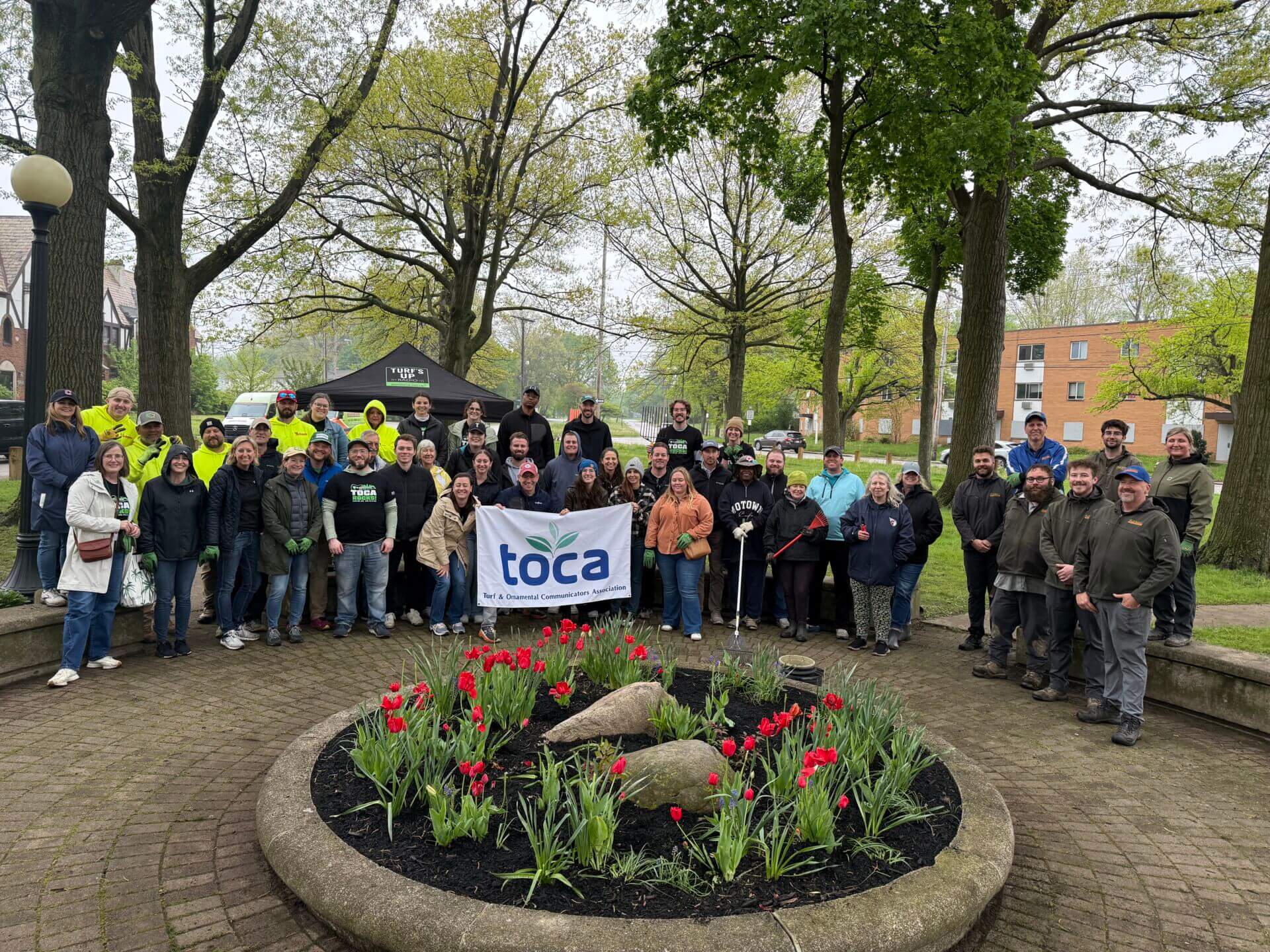 The project focused on planting enhancements, landscape bed improvements, pruning, edging and general park cleanup to create a cleaner, safer and more welcoming environment for residents and visitors. Project EverGreen originally renovated the park in 2022 with a much-needed facelift to enhance the aesthetic appearance, vibrancy and accessibility to the park. Since then, The Morelands Group, a volunteer group of neighborhood residents, waters the plants, picks up litter and keeps a close eye on their beloved park.
A key component of the volunteer effort included members of the Turf and Ornamental Communicators Association (TOCA), which held its annual conference in Cleveland during the final week of April. TOCA members include writers, editors, podcasters, public relations professionals, marketers and communications leaders, representing companies and organizations across the green industry.
The TOCA Annual Meeting combined professional development, networking, industry education and hands-on experiences throughout the Cleveland area. As part of the conference, TOCA members wanted to give back to the host city through a meaningful community service project focused on improving a neighborhood park and supporting local residents.
The project was supported through generous plant material donations from Bremec Nursery, Lake County Nursery, Willoway Nurseries and LaCava Landscape, whose contributions helped transform key areas throughout the park.
The day also highlighted the importance of maintaining healthy green spaces in urban neighborhoods – places that improve community pride, support environmental health and provide gathering spaces for families and residents.
“This was a wonderful opportunity for TOCA members to get their hands dirty, give back to the host city and see firsthand how neighborhood parks help bring communities together,” said Cindy Code, executive director of Project EverGreen. “It was especially meaningful to have green industry communicators volunteer their time and talents to help create a more welcoming space for local residents.”
“What a wonderful day at Helen Simpson Park last week,” said Meg Weingart of the Morelands Group. “Thank you so much for bringing TOCA members, Yardmaster, Turf Pride and Project EverGreen to our park. It really meant a lot to us and the park looks fantastic.”
Susan Rotatori of the Morelands Group also shared her appreciation for the project and volunteers.
“The Morelands Group cannot thank Project EverGreen enough for all the wonderful, donated plants and all the people power to get them planted and the park landscaped,” said Rotatori. “The park never looked so inviting and beautiful. We’re a little park, but it means so much to many.”
Volunteers worked side-by-side with community stakeholders to install new plant material around the park fountain and sidewalk areas, edge landscape beds, prune shrubs, remove debris and refresh the appearance of the park ahead of the busy spring and summer seasons.
Projects like Helen Simpson Park reflect Project EverGreen’s ongoing commitment to creating greener, healthier, cooler communities through collaborative green space revitalization efforts nationwide.
Project EverGreen extends sincere appreciation to all volunteers, donors and partners who helped make the day possible:
- Bremec Nursery
- Lake County Nursery
- Willoway Nurseries
- LaCava Landscape
- Yardmaster
- Turf Pride Lawn Care
- Turf and Ornamental Communicators Association volunteers
Together, these partners continue to demonstrate how the green industry can create lasting impact well beyond the landscape itself.
Thank you to all our generous sponsors!