TOCA Talk Summer 2025
TOCA Talk is proudly sponsored by EnP and Advanced Turf Solutions.

EnP has been Engineering Optimal Plant Health™ for nearly 30 years, manufacturing specialty fertilizers
under two brands: Foliar-Pak, and Age Old Nutrients.

Advanced Turf Solutions (ATS) is a green industry distributor that provides fertilizer, pesticides, grass seed, ice melt, and
more to professionals in the golf, lawn care, and sports turf markets.
Because EnP and ATS professionals believe that collaboration and the exchange of ideas are essential for innovation, they are proud to support the Turf and Ornamental Communicators Association (TOCA).
Thank you, members of the Turf and Ornamental Communicators Association, for supporting this industry through your information, education, and outreach.
President’s Message
Hey there, TOCA team!
By Scott Covelli, TOCA President

Scott Covelli, TOCA President
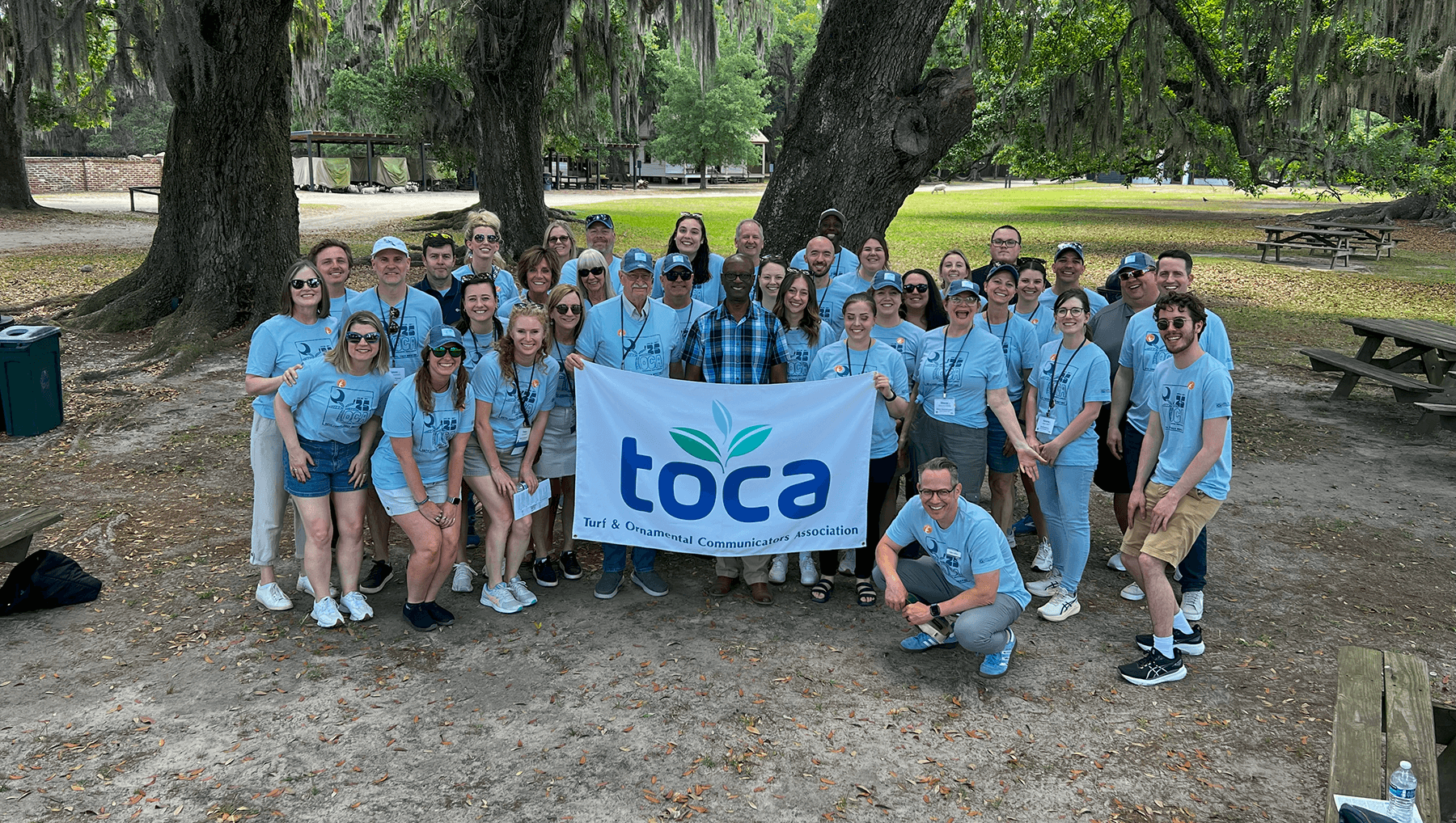
If I may speak on behalf of the 50 or so TOCA members who joined us in Charleston a few weeks ago, what a wonderful experience! If our 36th TOCA Annual Meeting were an album, it would be, as they say, “all hits, no skips.” From the professional sessions and exploring Middleton Place – America’s oldest landscaped gardens – to the TOCA Trotters Run/Walk and all the opportunities to connect and network with TOCA members, it was a valuable and fun time all around.
As I reflect on a common theme throughout the event, I kept coming back to the idea of listening. We’re all professional communicators, but it’s a good reminder that oftentimes, before we communicate, we need to listen.
Right away at the annual meeting, Brandon Bell from Syngenta shared valuable insights on inclusive communication. That doesn’t mean political correctness. It’s about wondering who your customer or audience could be, and finding ways to reach them through your overall content strategy. In this example, listening happens through creative consideration. Are you thinking about all the potential audiences and finding ways to make them feel like they’re a part of the “world” you’re creating in your message?
Next, Jon Greenberg from Poynter (always a hit at TOCA) showed us new ways to be more impactful with our writing. One of the most compelling parts of the presentation was us brainstorming ideas for a unique story on Pope Francis blessing a fleet of Harley Davidson motorcycles in 2013. We essentially had to “listen” to the story by observing all the different angles and find something unique and creative.
Perhaps most importantly, when we visited Middleton Place – a gorgeous botanical garden just outside Charleston – we had an opportunity to listen to the past. Their lead horticulturalist gave us a background on the property and its history. He shared that more than 100 slaves took 10 years to erect the buildings on the property in the 1700s and then decades more to care for the gardens and livestock. While it’s a beautiful property with undeniable charm, it has a troubling history, which led our guide to invoke the famous saying, “If we don’t learn about our history, we might repeat it.” As I traversed the gardens, I was struck by the complexity of it all. The natural beauty around us was combined with a tragic historical context. While there’s no easy way to process it, the takeaway for me was to listen and attempt to understand the nuances of a situation.
On Thursday, we began with an energetic session from Jon Patrick from Paradigm Communication. He taught us how to listen to our own bodies in remembering to breathe in stressful situations, but he also gave us practical tips on active listening in conversations. There are several ways to listen to someone and your success in a given situation can all depend on deciding how best to actively listen, whether it be to focus on the details, the emotions or the next steps.
We also listened to end users in the sod industry as they shared their experiences with sod and the demands of their jobs. One interesting takeaway I had is that they constantly have to manage expectations – from college football coaches to golf course superintendents. That requires listening to the expectations and the motivation behind it, and building on an existing relationship to make it happen in the most effective way possible.
Lastly, we listened to each other, as we participated in roundtable discussions and a problem-solving workshop on the best and most ethical ways to use artificial intelligence in our daily lives. Sometimes, the best way to navigate a new trend in the industry is to find inspiration from others.
After all that, maybe we should be the Turf & Ornamental Listeners Association – TOLA? Hmm, it doesn’t quite roll off the tongue, but I think the lesson is still important.
It’s an absolute joy to be your new TOCA president and I’m looking forward to continuing to listen and learn from each other as we grow our industry together.
If you want to join a TOCA committee or help us plan the 2026 TOCA Annual meeting in Cleveland, Ohio, don’t hesitate to reach out!
Scott Covelli
TOCA President
View the 2025 TOCA Communications Contest Award Winners
Schmaderer, Edwards enter TOCA Hall of Fame
TOCA welcomed two members – Jason Schmaderer and McGavock Edwards – to its Hall of Fame during the 2025 TOCA Annual Meeting, held in Charleston, S.C. Congratulations, Jason and McGavock!

2025 Hall of Fame Inductee, Jason Schmaderer
A TOCA past president, Schmaderer serves as the executive vice president, group account director at Swanson Russell, in Lincoln, Neb. With more than two decades spent at Swanson Russell, Schmaderer has been a tireless supporter and advocate for TOCA at Swanson Russell, according to his colleague Lynette Von Minden, who submitted Schmaderer’s TOCA Hall of Farm nomination.
“Jason insists that our green industry PR employees become TOCA members, which I know has helped them grow within their careers,” Von Minden stated. “He’s been very involved in TOCA and truly believes in the organization and the value it provides to the green industry. His green industry expertise is second to none.”
Von Minden shared for gratefulness for Schmaderer, primarily for mentorship and friendship. She met Schmaderer in 2007 when she embarked on her public relations counsel role at Swanson Russell and joined the team that worked on the Rain Bird account. A tad nervous about working with this client, Schmaderer helped her gain confidence about her new job role.
As the Rain Bird account supervisor, Schmaderer described the green industry and its distribution channel. “He explained Rain Bird in detail, its quirks and how they did things,” Von Minden remarked. “Jason took the time to teach me how irrigation systems work, the different components involved and the differences between residential, commercial and golf course systems. He made sure I was involved on every project so I could write intelligently about it and talk to our contacts at Rain Bird in a way that would instill their trust and confidence in me.”
Von Minden continued, “Jason’s knowledge, marketing savvy and green industry involvement have helped Swanson Russell win many clients in this space, including, perhaps the most noteworthy – SiteOne Landscape Supply. Jason pulled together an account team that took on the challenge of rebranding John Deere Landscapes and coming up with a new name and identity.”
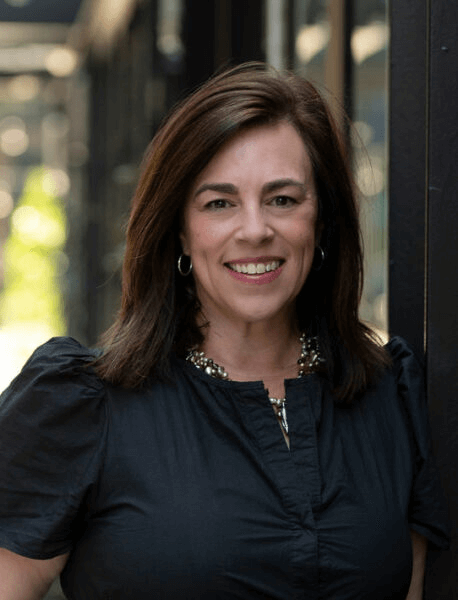
2025 Hall of Fame inductee, McGavock Edwards
Another TOCA past president (2012 and 2013), Edwards has been working in and around the green industry for nearly 30 years. Currently, she is the managing partner at E&V Strategic Communications in Raleigh, N.C. As managing partner, Edwards’s strong character, deep experience, high standards and knack for problem-solving guides the company’s people, clients and processes for greater success. Prior to E&V, Edwards led a 20-person team at IMRE as the Agency on Record for John Deere public relations and social media.
Edwards focuses on connecting the right message with the right audience at the right time. Her clients look to her for expert counsel and tactical execution for a multitude of activities – from crisis communication, reputation management and messaging to media relations, internal communication and social media marketing.
Besides the green industry, Edwards has worked with well-known brands in biotechnology, healthcare, manufacturing and consumer products. She listens to clients’ business goals, identifies audience insights and helps create a path to connectivity and success.
A graduate of the University of North Carolina at Wilmington, Edwards holds her accreditation in public relations, is a two-time PRSA Silver Anvil winner and has served on the Southeast District Board of the Public Relations Society of America. She sits on boards of directors for several regional non-profit organizations, including Now Serving.
TOCA Foundation names its 2025 scholarship winners

2025 Scholarship Awardee, Juliette Woehrle
Juliette Woehrle, an Elgin Community College student who will be transferring to Loyola University, and Jake Zajkowski, a Cornell University student, each won a $2,500 scholarship from the Turf and Ornamental Communicators Association (TOCA) Foundation. The TOCA Foundation awards scholarships to outstanding students pursuing a career in green industry communications, such as, but not limited to, careers working for trade publications, newsletters or companies/marketing agencies that promote the golf course, lawn and landscape, sod and nursery/greenhouse, sports turf or maintenance industries.
A full-time secondary English teacher and full-time student, Woehrle plans to pursue a new career in multimedia journalism. In addition, she volunteers with an outreach program that serves children and teenagers from underprivileged backgrounds. As a teacher, Woehrle made significant contributions to high school students’ academic and personal growth by advising extra-curricular activities, starting clubs, co-hosting science fairs and funding and curating a successful in-house library.
Woehrle’s interest in the green industry has deep family roots. Three generations of Woehrles spent their careers in this industry. Her great grandfather immigrated in 1923 from Germany and used his agronomy skills at Ravisloe Country Club, Illinois Grass Company and Kankakee Valley Country Club. Her grandfather worked as the superintendent for high-profile golf courses and served as president of the National Association Golf Course Superintendent Association (GCSAA) and Midwest Association Golf Course Superintendent Association. Her father works as a soft goods vendor that serves the golf course industry.
The Frederic Conger Wood Research Fellow, Zajkowski writes insights articles regarding the current political shifts, trade relationship and deregulation of Europe.

2025 Scholarship Awardee, Jake Zajkowski
This role also involves visiting with associations and businesses in key horticulture-growing regions, including the Netherlands, Belgium, Austria and Spain. Along with his studies in agriculture science, public policy and horticulture, Zajkowski works as a freelance journalist – contributing to AgDaily, Agri-Pulse, Farm & Dairy, Ohio Country Journal, Cornell Daily Sun and The Toledo Blade.
For Cornell’s College of Agriculture and Life Sciences, Zajkowski provides writing, digital marketing and media strategy support for Cornell Food Systems and Global Change, Cornell Turfgrass Program, Cornell Global Development, New York Youth Institute and Cornell Cooperative Extension. During his youth, Zajkowski worked in vegetable fields, managed greenhouses and honed his landscape designer skills. He shaped his writing through time spent on farms, working in horticulture labs and reporting on agriculture. In 2021-2022, Zajkowski served as the Ohio FFA state president.
Find more information about the TOCA Foundation Scholarship program, click here.
Turf News seeks editor
Turf News magazine posted a job opening – editor. The editor is responsible for creating and producing Turf News magazine six times per year.
The official publication of Turfgrass Producers International, Turf News magazine is published bi-monthly. Its primary focus is on turfgrass sod production, but it also covers all relevant aspects of the natural grass industry.
Click here for more details about this position.
Embracing AI without losing the human touch
By Kris Guy, Hunter Industries
Artificial intelligence (AI) has become a mainstream strategy for communicators, with the rising use of tools like ChatGPT, Microsoft Copilot and Perplexity to enhance research, writing and creative processes.
During the 2025 TOCA Annual Meeting, an interactive AI Roundtable sparked lively discussions around five key topics: editorial/public relations, research, writing, legal and tools. Green industry professionals shared how they’re using AI to enhance – not replace – their creative and strategic work. Here are some of the key takeaways.
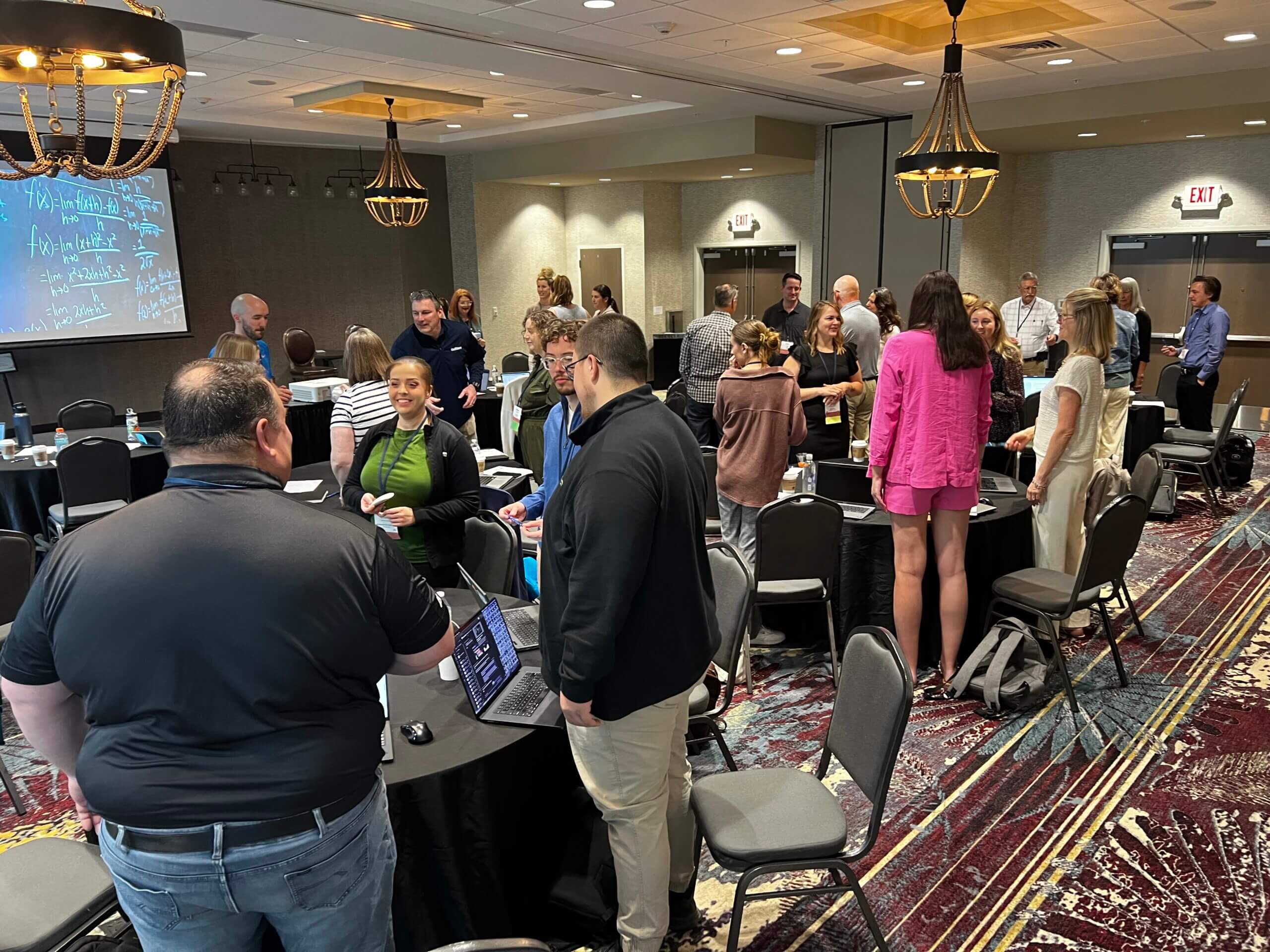
AI Roundtable discussion during the 2025 TOCA Annual Meeting
Editorial/public relations: Authenticity matters
Editorial teams are exercising extreme caution with AI. While it can help with research, outlining and ideation, many avoid using bylines with AI-generated content to protect credibility, authenticity and creative integrity.
As AI-generated material becomes more widespread, agencies are struggling to demonstrate the value of their human-created work, making it harder to justify their creative services and retain clients.
Despite AI’s useful aspects, many communication professionals still believe there’s an art to developing meaningful content infused with the empathy, nuance and originality that only human communicators can deliver.
Research: Fast, but verification needed
From conducting background checks to spotting industry trends, AI tools like ChatGPT and Perplexity can gather data in seconds, saving users valuable time.
However, participants expressed a need to verify the facts provided by these platforms. Scott Covelli of EPIC Creative cautioned against accepting AI-curated information at face value. Asking for source citations and cross-checking results helps guard against “hallucinating” facts – plausible but false or unverified information.
Writing: Useful support tool, not a shortcut
Content creators are using AI to refine copy, brainstorm headlines and overcome writer’s block, especially when on deadline. Still, many avoid using AI for original content creation to preserve authenticity.
“Use it as a tool, not a replacement for your voice, thoughts or ideas,” said Valerie Smith of Sod Solutions.
Legal: Proceed with caution
Legal discussions centered on copyright, plagiarism and information accuracy. While AI can perform tasks like drafting contracts and proposals, users remain concerned about reliability and litigation risks. Although AI is designed to seem knowledgeable, it still has much to learn. Summing up this point, Tim Merath of EPIC Creative quipped: “AI is like Stephen Hawking, but he’s three.”
Tools: Customizable and collaborative
Today’s AI tools offer more customization and collaboration features. Drew Wagner of LaunchPad showcased Claude AI as a prime example, praising the platform for its robust prompt library and easy integration with Google Suite.
Additionally, he offered this pro tip: use custom backstories to establish brand, voice and style settings for more accurate first drafts that require less editing. He also highlighted three of the top platforms – OpenAI, Anthropic and Google’s Gemini 2.5 model – noting that current trends are shifting toward “small product generation” and rapid prototyping.
Problem solving with AI
Following the roundtable discussion, attendees collaborated on AI-driven challenges. Groups used their AI knowledge to tackle communication-specific tasks, such as using ChatGPT to develop a headline A/B testing strategy and engaging with various AI resources to generate and refine a list of interview questions. Through these problem-solving exercises, participants discovered how AI can assist their work in ways that complement human creativity and expertise.
Effective communication under duress
By Alyssa Weis, Anthologic
The final day of TOCA’s 36th Annual Meeting was accompanied by a chorus of members reciting communication coach John Matthew Patrick’s lessons: “Just breathe.” “One, two, three, four, five.”
The group, well versed in high-pressure communications, connected immediately with Patrick’s practical techniques for high-stakes conversations. By the end of the awards dinner, it was clear this was a lesson everyone would take home and use right away.
The art of not holding your breath
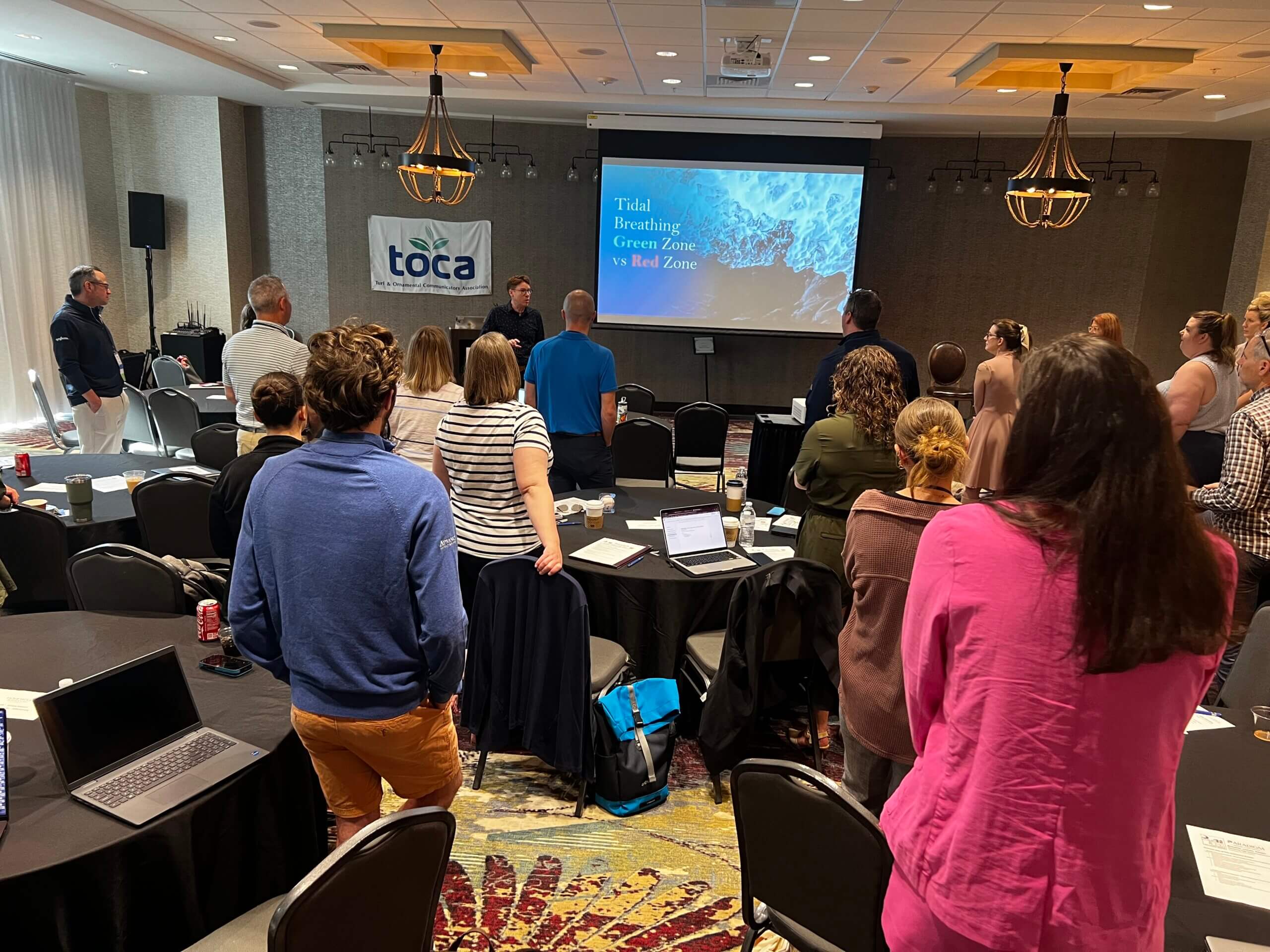
John Matthew Patrick leads a session during the 2025 TOCA Annual Meeting
The workshop kicked off with what can only be described as organized chaos: participants passing objects in random patterns while answering rapid-fire math questions. The result? A room full of professionals suddenly holding their breath, tensing up and struggling to multitask successfully.
“Why do you hold your breath when I ask you a math question?” Patrick asked the group. The answers were universally relatable:
- “I’m too focused on everything else.”
- “I don’t want to get it wrong.”
- “This isn’t normal!”
As it turns out, that “bracing for impact” is precisely what derails our communication, Patrick explained. When we anticipate potential criticism or mistakes, our bodies physically prepare for a blow, effectively shutting down our access to natural thinking.
The solution? A disarmingly simple technique called “active breath” that keeps oxygen flowing even when tension rises.
“I wasn’t as worried about messing up,” one participant noted after practicing. “It felt more sustainable, like playing the long game instead of trying to be perfect right away.”
4 dimensions of adaptive listening
With breathing under control, the group turned to the next layer of high-stakes communication: listening. Patrick guided participants into exploring how we listen and how that deeply influences the outcome of difficult conversations.
Enter the SAID framework for adaptive listening:
- Support: Prioritizing emotional validation and psychological safety
- Advance: Focusing on action steps and forward momentum
- Immerse: Gathering comprehensive information and context
- Discern: Evaluating options against established criteria
Through role-playing exercises involving budget cuts, creative rejections and performance reviews, participants identified their default listening styles. More importantly, they practiced switching between them based on the needs of the moment.
“What if your identity is closely intertwined with being the person that fixes things?” Patrick asked one participant who defaulted to Advance mode.
The revelation wasn’t just self-awareness; it was situational awareness. Participants began to understand how flexibility in listening can transform even the most difficult interactions.
“It’s making me more mindful of the different types of listening I’m doing,” one attendee reflected. “And making sure I’m switching between them when it’s the right time.”
A framework for staying present
By pairing active breathing with adaptive listening, participants walked away with more than strategies. They left with a framework – one that helps keep them present, focused and responsive, rather than reactive under pressure.
From sod farms to stadiums: Turfgrass insights from the field
By Cecilia Johnson, Sod Solutions
During last month’s Turf and Ornamental Communicators Association Annual Conference, attendees had the opportunity to hear from a panel of turfgrass professionals managing natural grass in a variety of settings – from production farms to college athletic facilities. The session, “Behind the Sod: Perspectives from Growers to Turf Managers Expert Panel,” offered an educational look into turfgrass management practices and challenges, giving communicators valuable insights into the industry’s day-to-day realities.
The discussion began with introductions, followed by moderator-led questions and an open Q&A. Panelists included Hank Kerfoot, president and founder of Modern Turf, Aaron Tipton, grounds supervisor for the College of Charleston, and K.C. Bell, senior director of athletic grounds at Clemson University. Each shared a unique professional journey and gave context to how turf decisions are shaped by everything from research and technology to budgets and event schedules.
Modern turf
Kerfoot kicked off the panel with an overview of Modern Turf, the South Carolina sod production company he and his wife launched following his early career on golf courses. He shared details about the varieties they grow and supply for sports, golf and landscape customers, and how technology helps streamline everything from soil prep to delivery. His experience in leadership roles within industry organizations has deepened his knowledge and kept his operation in step with the latest research and innovation.
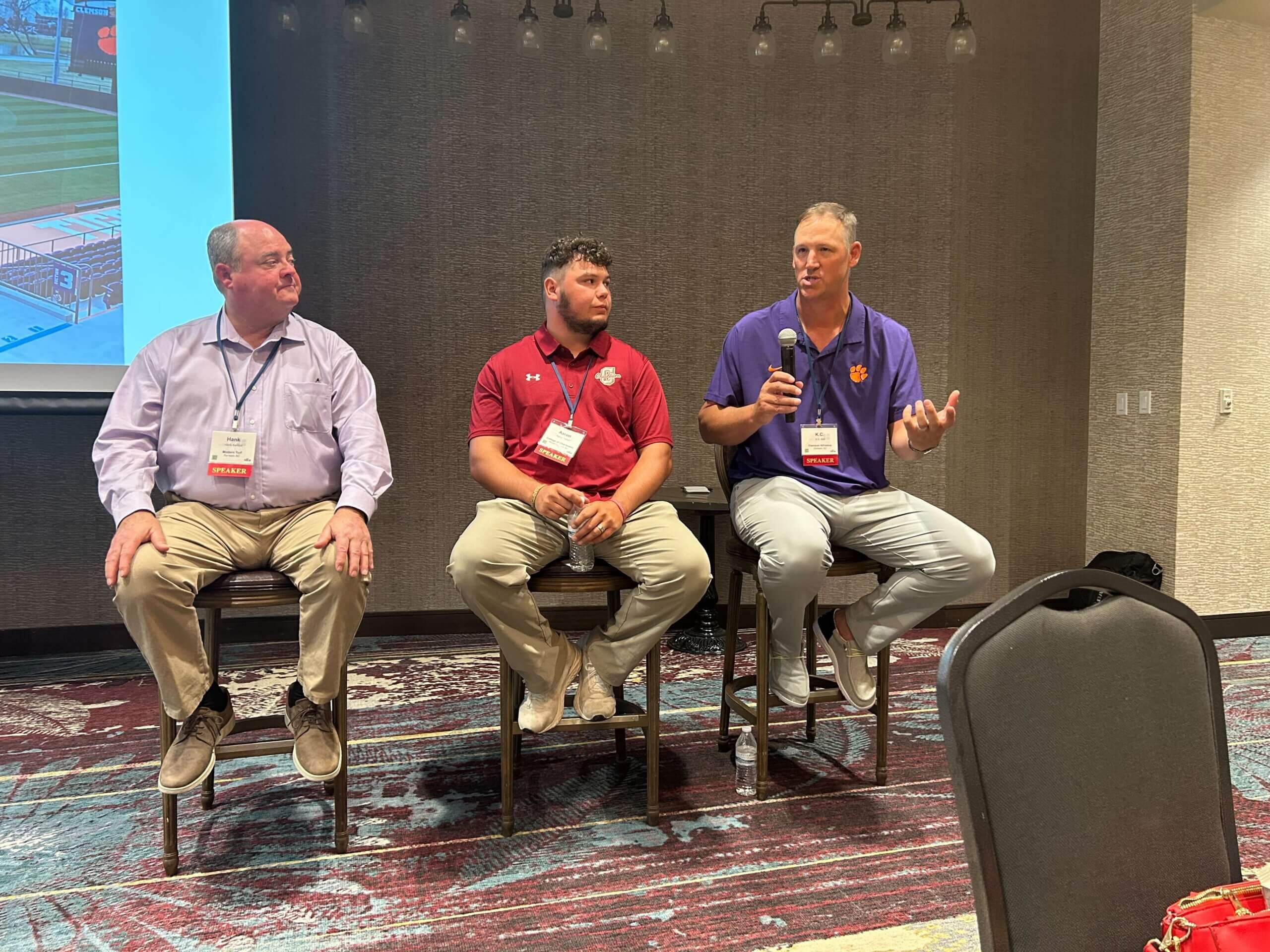
2025 TOCA Annual Meeting panel Discussion. L to R: Hank Kerfoot, Aaron Tipton and K.C. Bell
He provided perspective on the range of turfgrass varieties available today, the trials and research behind them, and how they make it from lab to farm to end user. His insights helped clarify how variety selection depends not only on performance traits but also on end-use goals and site-specific factors like climate and wear.
College of Charleston
Tipton shared his path into the turfgrass profession, which began in 2021 as a student worker and led to his current role overseeing four athletic fields at Patriots Point. His responsibilities include baseball, softball, soccer and tennis – all managed under budget constraints from the college’s athletic department. From sod installs and irrigation repairs to equipment maintenance and chemical applications, every decision must balance performance with cost.
Operating in a coastal climate, Tipton offered a relevant perspective on species and variety selection suited for South Carolina’s conditions. He emphasized how unpredictable weather, scheduling pressures and limited resources all factor into how he and his crew plan and maintain their fields throughout the year.
Clemson University
Bell provided a comprehensive look at what it takes to manage a large university’s athletic grounds. His crew is responsible for multiple fields and facilities, often balancing overlapping demands like practices, summer camps and external events. He noted that field managers often double as event planners, supporting efforts to generate revenue while protecting playing surfaces. Most recently, his team coordinated the rapid conversion of Memorial Stadium – Clemson University’s 81,500-capacity football venue commonly known as Death Valley – into a baseball diamond to host a Savannah Bananas exhibition.
Like Tipton, Bell operates within strict budget parameters that influence every decision from sod selection and labor to irrigation and scheduling. His approach centers on maintaining field aesthetics and safety through proactive maintenance and season-long planning.
Takeaways for communicators
The panel covered turfgrass selection, management strategies, staff training, environmental challenges and continuing education. Attendees asked questions about product performance, player safety, supplier partnerships and how to navigate the real grass vs. synthetic turf debate – an issue that sparked strong feedback from all three panelists in favor of natural grass benefits.
The session gave communicators a closer look at how turfgrass professionals operate – from research-backed variety selection to the pressures of real-time field prep. It also highlighted the importance of accurately representing their work to external audiences.
Thanks to Hank, Aaron and K.C. for sharing their experiences. TOCA members are encouraged to follow them or their institutions’ professional or turfgrass-related pages on social media for more insight into the hands-on work happening behind the scenes.
Connecting across identities through inclusive communication
By Lindsay Rusczak, G&S Business Communications
The words we choose not only describe the world we live in but also help shape it. At the 2025 TOCA Annual Meeting, Brandon Bell, people and organizational development lead for Syngenta, kicked off the week of education with his presentation, “Words Create Worlds.” He challenged attendees to reconsider the content of their communications and the underlying intent and impact of their language. By the end of the presentation, TOCA members were likely reconsidering how they speak, but more importantly, how they think.
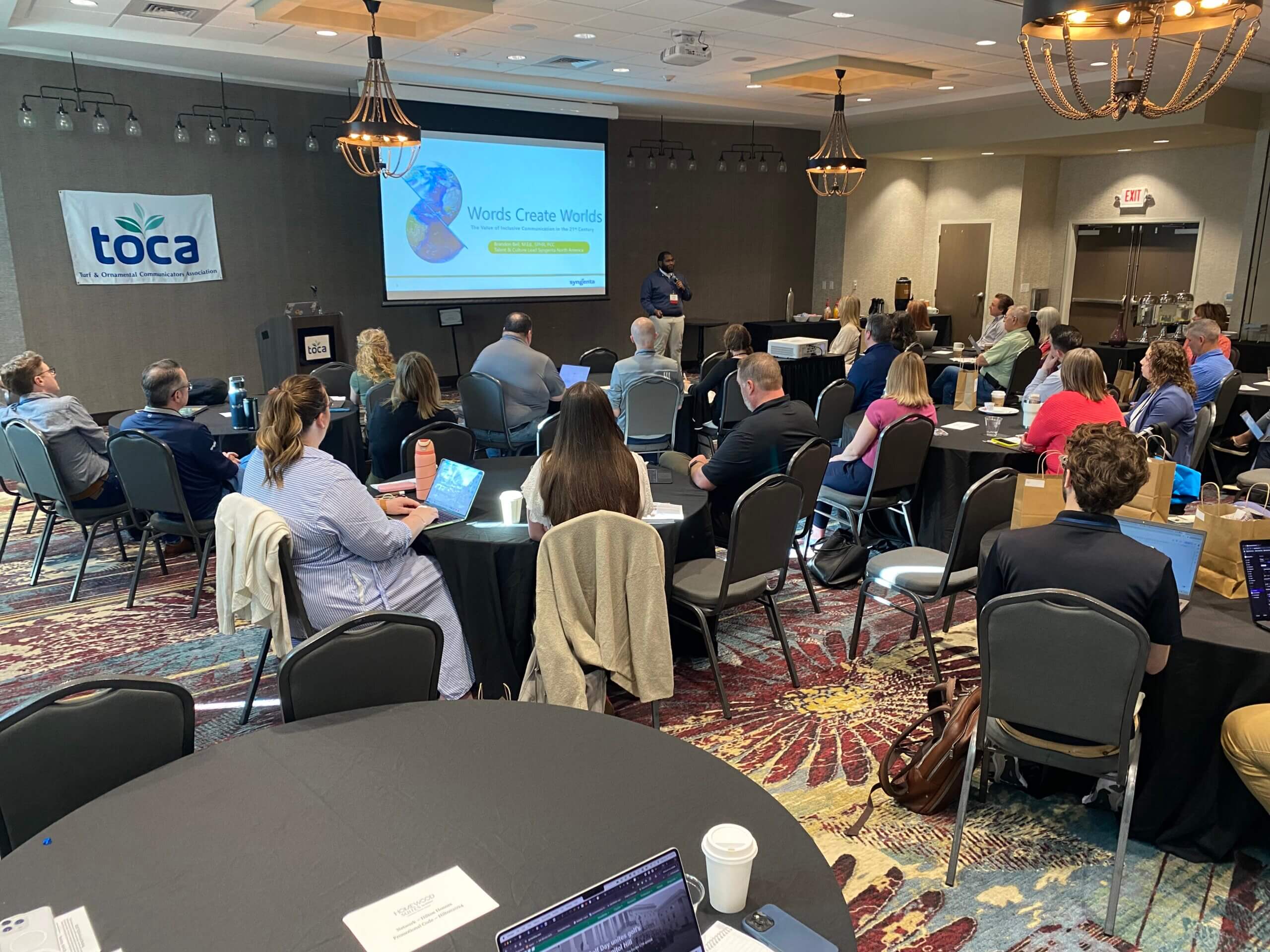
Brandon Bell, Syngenta
The inspiration, as Bell admitted, came from a bar conversation. During his time as assistant director at Elon University, he referred to one of his students as “the comms major.” His mentor quickly corrected him: “Your students are not comms majors. They’re students studying communications.” This small shift in phrasing, his mentor explained, prevents the student from limiting the way in which they think about themselves.
This was Bell’s core message. Inclusive communication isn’t just what you say but inviting the receivers to see themselves as a part of the “world” you are describing. It’s being intentional by considering not only who you usually speak to but also who you could be reaching and what will truly resonate with them.
Bell framed inclusive communication as a process instead of a checklist. It begins with reflection: understanding the world you live in, the world you’re describing and the people you hope to reach. Then comes iteration: the willingness to constantly rethink, reframe and retool how you communicate to better resonate with and include others. Every message doesn’t need to speak to your entire audience. He encouraged thinking of your messaging like a playlist for a family road trip – not choosing one song or artist for everyone but creating a mix that connects with different people at different moments along the journey.
Bell emphasized that inclusive communication should not focus on lingo, buzzwords or saying all the “right” things. In fact, he reminded us that no set of words will please all people, all the time. Inclusive communication isn’t about political correctness or picking sides. It’s about expanding your audience, rather than narrowing it.
Bell spoke about identities and how we’re shaped by the ones we’re born with, like nationality, and the ones we gain along the way, like parenthood. These identities influence how we think about ourselves and process information. The more communicators understand this the better they can craft messages that connect their audiences across experiences.
The payoff for inclusive communication isn’t just for one’s own benefit. It has business implications as well.
- This mindset prompts self-awareness, which disrupts patterns in your work so you can innovate again.
- It encourages the communicator to get close to the business strategy and the audience.
- It strengthens your strategy, which allows you to enable business success by thinking more comprehensively about the worlds your audiences navigate and ways to bring them in.
Ultimately, Bell taught TOCA members that communication is not merely about transmitting information. It is about connection and choosing words that invite others in, challenging assumptions and reflecting a broader, more inclusive worldview.
Craft better content with writing best practices
By Amy Jones, E&V Strategic Communications
Writing is central to our work as communicators. At the 2025 TOCA Annual Meeting in Charleston, S.C., Jon Greenberg of the Poynter Institute shared tips on simplifying complex topics and turning good writing into great.
Think about the last article that stuck with you. What made it memorable? One of the best ways to improve your writing is to read often. When something resonates, study why. Apply those insights to your own work to elevate your content and better engage your audience.
Memorable writing starts with strong planning
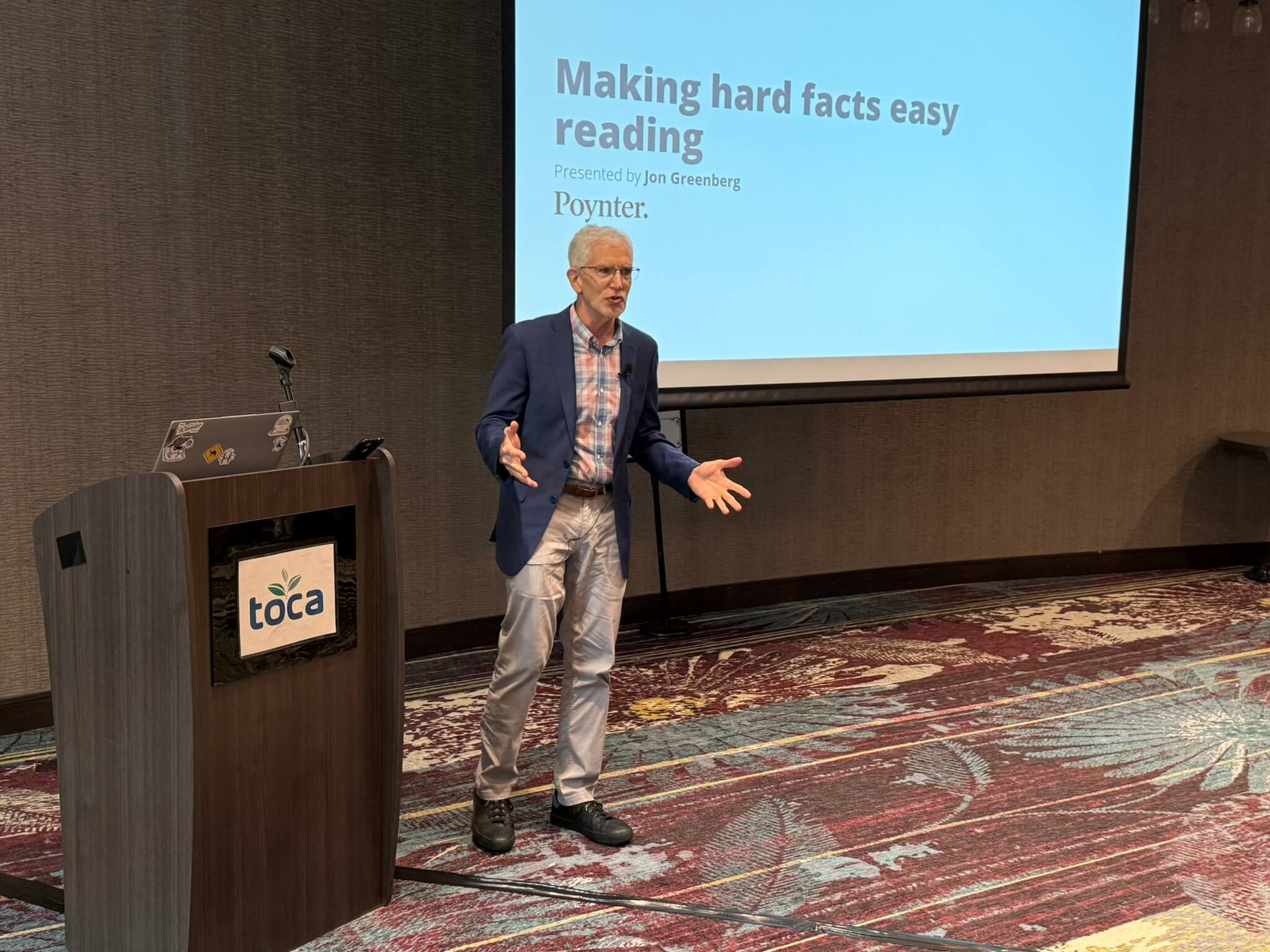
Jon Greenberg speaks at the 2025 TOCA Annual Meeting
The path to a great article starts well before pen meets paper. When drafting long-form copy, regardless of the topic, it’s important to follow a process that allows for ideation, refinement and revision.
Start by developing your idea, exploring the topic and the various avenues your story may take you. Consider leveraging a story wheel, a framework that places your topic at the center and prompts you to explore various angles through the situation, people involved, challenges faced, potential impact and more. This approach can help structure your story in a way that resonates and leaves a lasting impact.
Using this framework, collect as much information as possible. Following the research phase, identify the elements that stuck out, as those are likely the most compelling angles and can serve as building blocks for the final product.
Use content order to take the reader on a journey
The order of content can often be challenging. However, with structure comes the opportunity to create a journey for your readers, taking them from point to point as they progress.
As attention spans continue to dwindle, prioritizing story order is critical to hook readers into your story. The top of the piece should provide a broad overview of the main points of the story within the first three to four paragraphs.
Following the inverted pyramid style, throughout the rest of the piece, include news bits that expand on the overarching story, leaning into elements that are interesting, informative and supportive.
Implement best practices to strengthen copy
As you move into draft mode, consider sentence structure and word choice to draft copy that captures your reader immediately. A few tips to consider as you write:
- Create strong headlines. The first text seen, a great headline will encourage your audience to stop and read an article. Make sure your headline is specific, grammatically clear, leans into shorter words and incorporates dynamic verbs. Avoid tech-speak or vague words that may dissuade a reader from continuing to read.
- Use periods to simplify complex topics. Periods are a powerful tool, creating a stop sign for the reader and slowing down delivery. Use periods to control the reading and create signals of importance throughout the article.
- Adjust word order to boost impact. For example, consider the 2-3-1 structure, which places the most important information last, second most important first, and least important in the middle.
- Incorporate strong, dynamic verbs. Verbs create excitement in a story, but the wrong choice could hinder impact. Consider the verbs you use, asking if there is a better, more dynamic option.
- Avoid technical terms. Simplify your word choice with the “average” reader in mind. Technical terms lose the audience’s attention.
Use revisions strategically
Good writing always incorporates a review and revision process. As a first step, review your copy, considering word choice and article structure. If you need to reduce article length, shorten through selection, not compression. Instead of trying to take information and say it in fewer words, instead, remove the least important sections.
Once ready, if possible, share your content with at least one other person to have another set of eyes on content. They can offer a fresh perspective – identifying confusing sentences and providing recommendations to strengthen the piece.
When revising, remember to put a deadline for completion. Writing is never perfect and a set deadline will ensure there isn’t an endless cycle of reviews.
Good writing doesn’t happen by accident. It’s a product of thoughtful planning, intentional structure and careful revision. By applying these best practices, you can craft content that not only informs but truly connects with your audience.
Digging into history and horticulture at Middleton Place
By Valerie Smith, Sod Solutions
This past month, Turf and Ornamental Communicators Association (TOCA) members gathered in Charleston, S.C., for a conference that mixed learning with an eye-opening dive into American gardens and their layered past. Our visit to Middleton Place, a National Historic Landmark and home to America’s oldest landscaped gardens, was a highlight – made even more memorable by a personal talk from Sidney Charles Frazier, Middleton’s head groundskeeper.
Getting a feel for the past
Middleton Place is more than just a garden; it has been around for nearly 300 years and is packed with stories from America’s past. Founded in 1741 and developed over generations by the Middleton family, the estate has endured wars, hurricanes and all the twists and turns of history. Today, it stands as a powerful reminder of the beauty and complexity of our shared past.
As we strolled the grounds, we were invited to reflect on the stories of the free and enslaved people who built and maintained these gardens. The landscape itself is a blend of formal European symmetry and the natural feel of the South Carolina Lowcountry – a unique blend of human design and wild charm.
Sidney Frazier
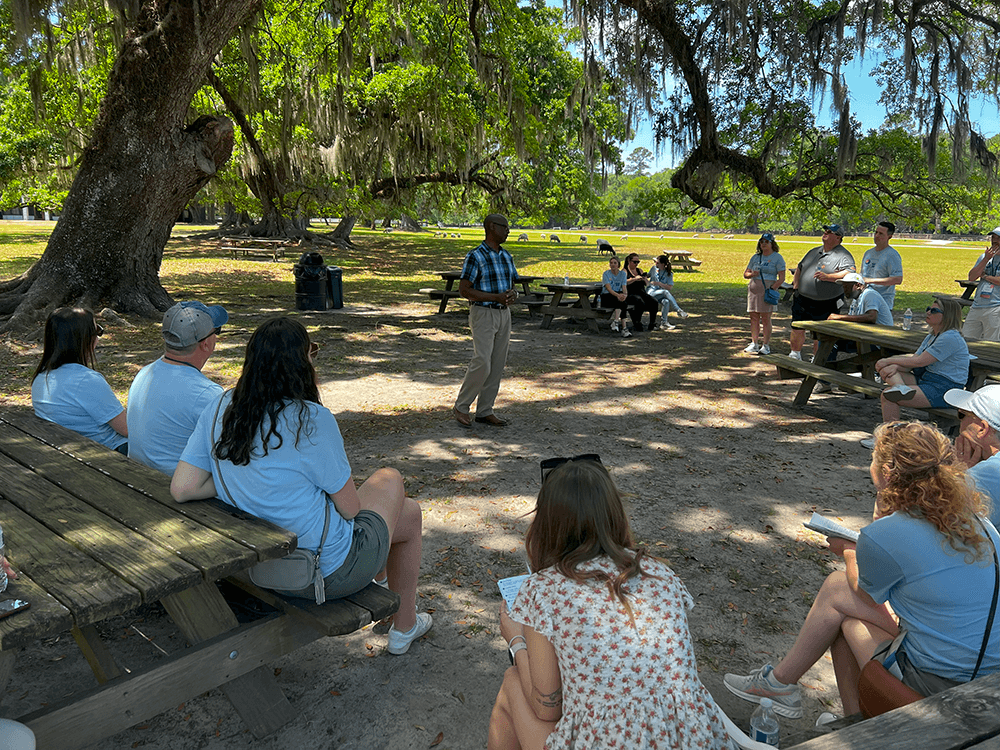
Sidney Charles Frazier, Middleton Place’s vice president of horticulture and head groundskeeper
Our group heard from Sidney Charles Frazier, Middleton Place’s vice president of horticulture and head groundskeeper. Frazier, who has tended these gardens for nearly 50 years, brings tons of knowledge and heart to the job.
He recounted his first summer job at Middleton in 1974, when he fell in love with the gardens’ scale and history. Over the decades, he has become a steward of rare and historic camellias, including the “Reine des Fleurs,” one of the first camellias planted outdoors in America. His dedication to preserving special plants with real history behind them, sometimes through painstaking methods like air-layering, earned him the nickname “King of Camellias.”
Where nature meets the past
The gardens could be described as a “total showstopper.” We wandered along the terraced Butterfly Lakes – their precise symmetry reflecting the vision of 18th-century designers and the labor of enslaved Africans who shaped the land. The Reflection Pool, cypress swamps and sunken gardens gave us some peaceful, wow-worthy views.
One of the totally jaw-dropping moments was seeing the Middleton Oak, a massive 900-year-old tree that’s basically seen it all. Nearby, the cypress lake and swamp area teemed with life, including a memorable encounter with several alligators lounging in the sun. The presence of these alligators was a reminder that Middleton Place is just as much about the wildlife as the history.
Throwback farm life: Sheep, wool and one chill barn cat
Our walk also took us through the working Stable yards, where guides showed off old-school crafts and farming techniques. We watched as they showed us how wool was spun from the estate’s Gulf Coast sheep, a breed historically raised in the region. These living history demonstrations gave us a real glimpse into how people lived and worked back then.
What we took away (besides great photos)
Middleton Place is a place of contrasts – beautiful but also packed with tough history. As communicators in the green industry, our visit was both an inspiration and a push to protect and preserve what matters. Sidney Frazier’s dedication to the gardens, his deep respect for history and his commitment to education reminded us of the importance of preserving not just plants but the stories and lessons they represent.
No visit to Charleston would be complete without experiencing Middleton Place. For TOCA members, it was a total sensory ride through the past, giving us a fresh lens on how we think about the landscapes we shape and share.