TOCA Talk – Spring 2022

TOCA Talk is proudly sponsored by EnP. EnP has been Engineering Optimal Plant Health™ for nearly 30 years, manufacturing specialty fertilizers under two brands: Foliar-Pak, and Age Old Nutrients. Because EnP professionals believe that collaboration and the exchange of ideas are essential for innovation, they are proud to support the Turf and Ornamental Communicators Association (TOCA).
Thank you, members of the Turf and Ornamental Communicators Association, for supporting this industry through your information, education, and outreach.

The Vice President’s Corner – TOCA offers industry-specific education
By Kristine White, TOCA Vice President
It was great to see so many people in person in Kansas City, Mo., last month! It was one of our larger TOCA Annual Meetings in the association’s history and it most definitely did not disappoint.
Personally, one of the reasons I have returned to the TOCA Annual Meeting nearly every year is the industry-specific education that is the cornerstone of the meeting. While other communications groups offer educational opportunities, TOCA is specific to communications in the green industry. This has been extraordinarily valuable to my continuing education in my nearly 14 years as a member. I have learned so much from the end-user and expert panels to the writing speakers and tours. For this very reason, along with a short drive from Des Moines, Iowa, my employer chose to send six people from our agency to attend the meeting this year. I was so proud to introduce TOCA to the new attendees and share an organization that has been near and dear to my heart for so long. They quickly saw the value and camaraderie of the group and I encourage you to bring additional members from your organization when you can.
We heard inspirational words from Bob Kendrick of the Negro League Baseball Museum. I think we all could have listened to him for hours. In our workshop session, Doug Ward from the University of Kansas helped us tighten up our writing. Our colleagues from the National Association of Landscape Professionals, Golf Course Superintendents Association of America and Sports Field Management Association talked about all the great membership services they offer, and we also heard about the importance of print journalism. My personal favorites were the end-user panel and the tour of Arrowhead Stadium. I always enjoy hearing from people who are really in the thick of things, trying to make grass grow and working to keep it beautiful. And, of course, a tour of a National Football League locker room doesn’t hurt either.
From a business perspective, TOCA looks to have bounced back from a temporary dip during the height of the COVID-19 pandemic, which is great to see. Solid numbers for meeting attendance and membership really help contribute to that. For the rest of 2022, be on the lookout for a new, quarterly webinar series from our professional development committee, as well as a new social gathering at ELEVATE in September. We have many great things happening as an organization and thank you for your continued support of TOCA!
TOCA welcomes 4 new board members
During the Turf and Ornamental Communicators Association Annual Meeting, held May 3-5, in Kansas City, Mo., four new members joined the board of directors – Emily Combs, marketing and PR content writer for Advanced Turf Solutions, Chad Wiertzema, marketing leader for Foley, LaCresha Styles, client service manager for G&S Business Solutions, and Matt McArdle, creative copy manager for Hunter Industries. Dawn Rigby, Xylem Marketing, “retired” from the TOCA board. Combs will be taking over Rigby’s role on the TOCA Professional Development Committee.
TOCA’s executive committee remains the same.
- Mark LaFleur, president, Turf & Landscapes, Syngenta, communications lead
- Kristine White, president-elect/vice president, Performance Marketing account director
- Russ Warner, past president, GIE Media national accounts manager
- Scott Covelli, secretary/treasurer, EPIC Creative public relations supervisor
Other TOCA board members include:
- Cindy Code, Project Evergreen executive director
- Jon Kiger, TurfNet director of media and membership
- Darius Lane, John Deere public relations manager
- Abbey Barry, PBI Gordon communications senior specialist
- Lynette Von Minden, Swanson Russell public relations manager
- Jill Odom, National Association of Landscape Professionals content manager
- Bill Roddy, Golfdom and Landscape Management, North Coast Media, LLC group publisher
TOCA adds Hansen, Obermann to its Hall of Fame
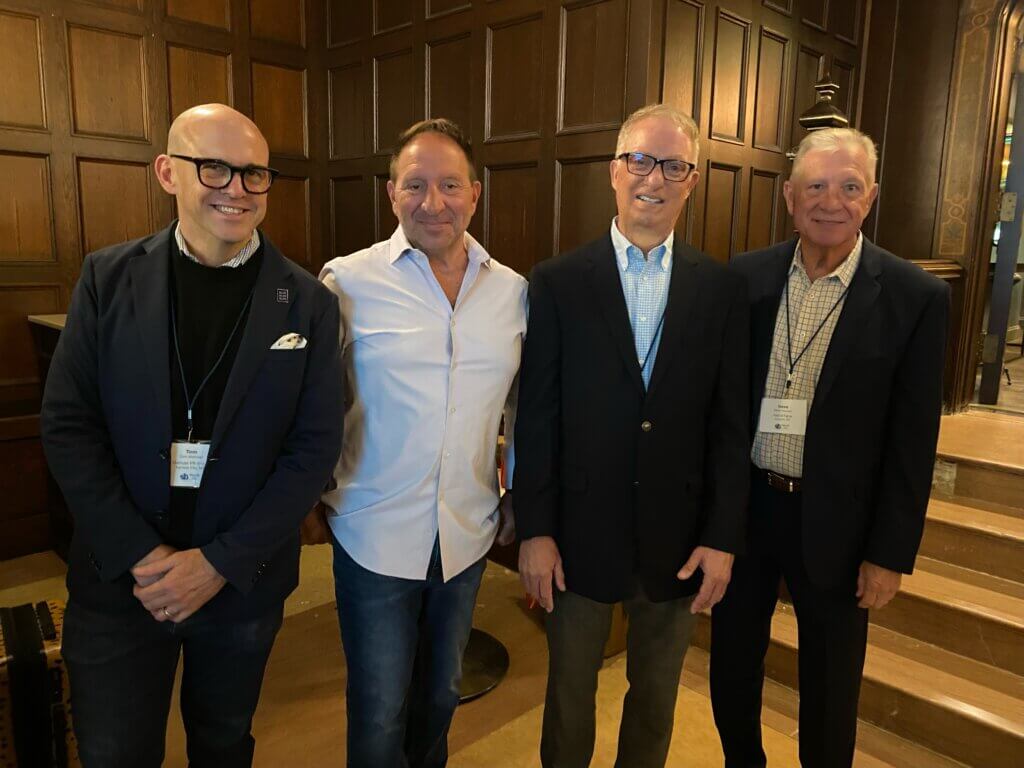
Pictured L to R: Tom Mentzer – Volunteer of the Year, Darren Gruner – Environmental Communicator of the Year, Doug Obermann – TOCA Hall of Fame and Dave Hansen – TOCA Hall of Fame
Dave Hansen and Doug Obermann, decades-long supporters of the Turf and Ornamental Communicators Association (TOCA), were inducted into the TOCA Hall of Fame during its 32nd Annual Meeting in Kansas City, Mo.
The mission of the Hall of Fame is to promote TOCA’s most outstanding past and present members, amplify and enhance its ideals, advance the professional standards that TOCA champions, and preserve the historic achievements that TOCA members have accomplished.
“Dave Hansen and Doug Obermann spent decades promoting TOCA and its value to its members through their time, talent and treasure,” said Kristy Mach, TOCA executive director. “The is a well-deserved honor for both of them.”
Both TOCA Hall of Famers leave a legacy of activity by their companies that still exists today. Hansen, through Swanson Russell, and Obermann, through PBI-Gordon, instilled in their companies the need for professional improvement in editorial and marketing communications in the green industry.
Obermann began his career in 1988 at PBI-Gordon, rising through the ranks, ultimately retiring as head of sales in 2019. He, and many of his colleagues, have been members of TOCA for decades. He consistently encouraged numerous PBI-Gordon communications professionals and marketing agency people to be part of the organization. PBI-Gordon has been a long-time sponsor of TOCA.
Former TOCA Executive Director Den Gardner said, “Doug always sought to make every organization he was involved with just a little bit better every day; and he succeeded.”
Hansen joined Swanson Russell in 1988 and is currently a co-owner and chairman of the marketing communications agency. He will be retiring this year. Swanson Russell was the first agency to recognize the value of TOCA to its employees and the organization has been a leader in TOCA for more than 30 years.
Cindy Code, TOCA board member and executive director of Project EverGreen, said, “Dave always answered the call when he was asked to serve on a committee, solve a problem or help launch a non-profit. I’ve always admired his quick smile and relaxed style that never wavered, whether talking work or about his beautiful family.”
Hansen and Obermann were also involved with Project EverGreen for many years, serving in a variety of roles with numerous other TOCA members the past 15 years.
Congratulations to Dave and Doug!
Darren Gruner wins TOCA’s Environmental Communicator of the Year Award

Pictured L to R: Cindy Code, Darren Gruner and Kristy Mach
The Turf & Ornamental Communicators Association (TOCA) and Project EverGreen announced that Darren Gruner, founder and CEO of Turf’s Up Radio, is the recipient of the 2022 TOCA Environmental Communicator of the Year Award. The award, which recognizes individuals for outstanding communications efforts regarding publicly managed green space and environmental issues, was presented during this year’s TOCA Annual Conference in Kansas City, Mo.
Gruner, who is also the principal at Totalscape Design in Ft. Lauderdale, Fla., has been involved in the landscape industry since high school when he launched a lawn mowing service. The experience taught him how the business world works and made him appreciate both the aesthetic and environmental benefits of well-maintained green spaces.
In 2010, the New Jersey native started doing podcasts and guest hosting on local stations and satellite radio to fill a void he felt existed in the landscape and lawn care industry. His goal was to help elevate and educate the green industry, sharing many years of experience with those who were eager to listen.
In 2019, Gruner combined podcasting with live 24/7 radio and broad internet exposure to launch Turf’s Up Radio, a platform that is accessible to green industry professionals and consumers across the country and globally. Turf’s Up Radio offers a variety of live programming and podcasts – covering everything from tips on financial management and sales to industry news and plant health. The network currently has 50,000 monthly listeners.
“We wanted to create a forum where the industry can come together and exchange information, share ideas and connect through their love for the outdoors and all the benefits it provides,” said Gruner. “The green industry is a terrific place to make a living and have a positive impact on the environment and people’s lives, and Project EverGreen has given me the opportunity to give back to communities in need of professional volunteerism.”
Gruner is an active volunteer with Project EverGreen’s GreenCare for Communities initiative. He has put his talents to work on urban green space renovation projects in New York City, New Jersey, Florida and Michigan, which have transformed underused and struggling green spaces into vibrant community hubs that provide numerous social, economic and environmental benefits to residents.
“Darren is a gifted communicator whose natural curiosity and demeanor brings out the best in his guests and listeners on Turf’s Up Radio. With regular radio shows on running a business profitably to in-the-field tips to industry trends and innovations, the impact of the information presented day in and day out is priceless,” said Cindy Code, executive director of Project EverGreen. “Through his volunteer community work, he’s been instrumental in sharing with gardeners and consumers the know-how needed to maintain a healthy green space.
TOCA names 11 Gardner Award winners
The Turf & Ornamental Communicators Association (TOCA) recognized winners of its Annual Communications Contest during the association’s 33rd annual meeting, held May 3-5, in Kansas City, Mo. This year’s contest yielded more than 300 entries.
TOCA’s Communications Contest recognizes individuals for excellence in writing, design, photography/audio visual, digital media and special projects. Eleven entries garnered the coveted Gardner Awards, which represent the top-ranked entries from the marketing and publishing categories.
This year’s Gardner Award winners include:
International – Design
Best Design Publication (1-page design article)
“Light at the end of the tunnel”
Turf Matters
Tim Moat
Design
Digital Media – Digital Design
“E-Z-GO Liberty Pre-Order Digital Ad”
Swanson Russell
Katie Sands, Nino Kapetanovic
Design
Cover Page Design – Printed Magazines
“Level Up”
National Association of Landscape Professionals
Rob Ghosh
New Media
Websites
“New Ryan Website”
EPIC Creative
New Media
Podcasts
“Choppy waters; episode 1”
GIE Media
Jimmy Miller
Photography, Video and Multimedia
Best Short Video
“Jacobsen ‘Sincerely Jake’ Brand Video”
Swanson Russell
Katie Sands
Photography, Video and Multimedia
Best Single Photo
“21 at last”
North Coast Media
Pete Seltzer, Golfdom Staff
Special Projects/Programs
Best Integrated Marketing Campaign
“2021 Virtual Golf Industry Show”
G&S Business Communications, Syngenta
Special Projects/Programs
Best Single Issue
“October issue”
GIE Media
Brian Horn, Kim Lux, Jimmy Miller
Writing
Copywriting for a Display Ad – Commercial Publications
“Tahoma 31 Swiss Army Knife”
What’s Your Avocado?
Stacie Zinn Roberts
Writing
Business Management – Commercial Publications
“Twice the work, half the workers”
North Coast Media
Christina Herrick
To view a complete list of 2022 TOCA Communications Contest award winners, go to: https://www.toca.org/contest-awards/communication-awards.
University of Illinois student serves as TOCA intern at HLK

Erin Wunderlich
The Turf & Ornamental Communicators Association (TOCA) Foundation offered the TOCA marketing internship to Erin Wunderlich, a senior at the University of Illinois at Urbana-Champaign. She is studying agricultural communications, with a minor in food and environmental systems, and natural resources conservation.
Wunderlich completed two internships – one as the Illinois AgriWomen social media intern and one as the University of Illinois Extension writing and design intern. For Illinois AgriWomen, she updated social media platforms to provide relevant and timely information, and created social media content in a creative, concise and clear manner for large social media platforms. Wunderlich produced press releases and feature stories, developed informational graphics to accompany website and social media posts, and created and scheduled website and Facebook events for upcoming Extension programs for the University of Illinois internship.
On campus, Wunderlich is involved in Sigma Alpha, a professional sorority, Illini Agricultural Communicators of Tomorrow Club, serving as secretary, Phi Eta Sigma National Honor Society and University and Campus Band.
HLK is hosting Wunderlich as the 2022 TOCA summer intern. The eight-week internship program will offer a challenging and rewarding real-life work environment within an innovative and dynamic advertising agency. Wunderlich is part of a group of interns who will work together as a team to complete and pitch two client projects. Each intern will be paired with a mentor, who will show them the ropes, invite them to team meetings and provide help and insight throughout the program.
HLK is a creative and technology agency, focused on understanding and changing audience behavior through deeply integrated brand experiences. The agency brings clarity of context and creative resolution capable of changing behavior and shaping belief in brands.
The TOCA marketing internship is funded through the TOCA Foundation by Den and Sandy Gardner, and Dave Hansen. The Gardners own Gardner & Gardner Communications, a marketing/association management firm based in New Prague, Minn. Hansen is the partner/CEO of Swanson Russell, a marketing communications firm based in Lincoln, Neb.
Panel: Getting the most out of your industry associations
By Emily Combs
How can professionals in the landscaping, sports field and golf course industries get the most out of their industry associations? Representatives of NALP, SFMA and GCSAA gave us a glimpse of the many opportunities their associations offer members and sponsors.
Lisa Stryker, National Association of Landscape Professionals
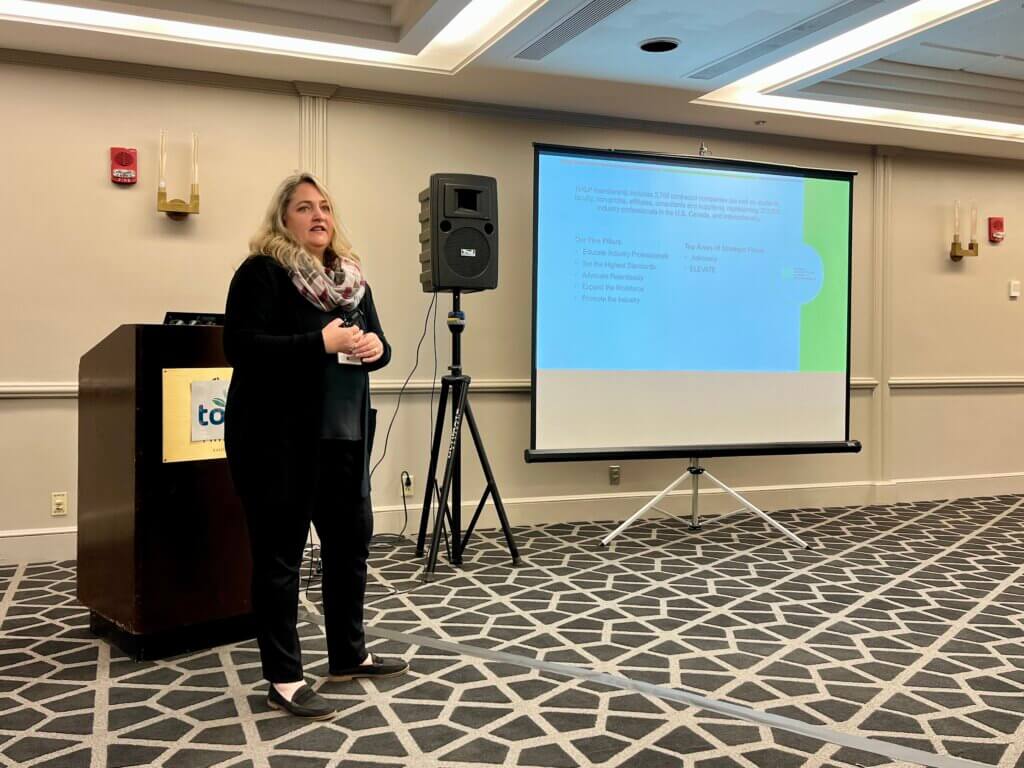
Lisa Stryker
Lisa Stryker is the vice president of marketing & communications for the National Association of Landscape Professionals (NALP). NALP is a nonprofit that represents landscape contractor companies. The organization currently has more than 3,000 contractor company members, representing about 200,000 employees.
NALP has five pillars that ground its programming:
- Advocate relentlessly
- Educate industry professionals
- Expand the workforce
- Promote the industry
- Set the highest standards
From those pillars, NALP offers a range of opportunities for landscape contractors and communicators.
A new opportunity this year is the ELEVATE national conference and expo, formerly LANDSCAPES and GIE. This year’s conference will be in Orlando, Fla., Sept. 18-21, and then move to a different location each year. The event will provide education and networking for landscape professionals, with attendance expected to be as high as 1,500.
The advocacy pillar focus is on the gas-to-electric transition, H-2B program and pesticide issues. NALP has a grassroots advocacy campaign called Voices for Healthy Green Spaces that advocates for “industry policy interests and concerns at all levels of government,” according to its website. Stryker said the campaign is for “anybody who has a stake in keeping their green spaces well maintained” to join. Membership is free and members receive approachable, localized information about regulations that could affect them. The goal is to encourage individual members to advocate in their areas.
NALP also provides opportunities for green industry professionals to give back to their communities. From the annual Renewal & Remembrance project at Arlington National Cemetery to the National Collegiate Landscape Competition to the NALP Foundation for research and scholarships, volunteers can help meet needs that are near to their communities and their passions.
NALP publications include a weekly newsletter, print and digital magazine, and customizable financial benchmark study. These publications offer web advertising, limited e-mail marketing, retargeting ads, content series and “bespoke” custom-sponsored content. Another sponsorship opportunity is the NAVIGATE business coaching program, which pairs industry professionals with mentors from non-competing markets.
Stryker described NALP events as the “cornerstone of how members get engaged.” There are also seats for suppliers and agencies on NALP committees, councils and even board of directors.
Whitney Webber, Sports Field Managers Association
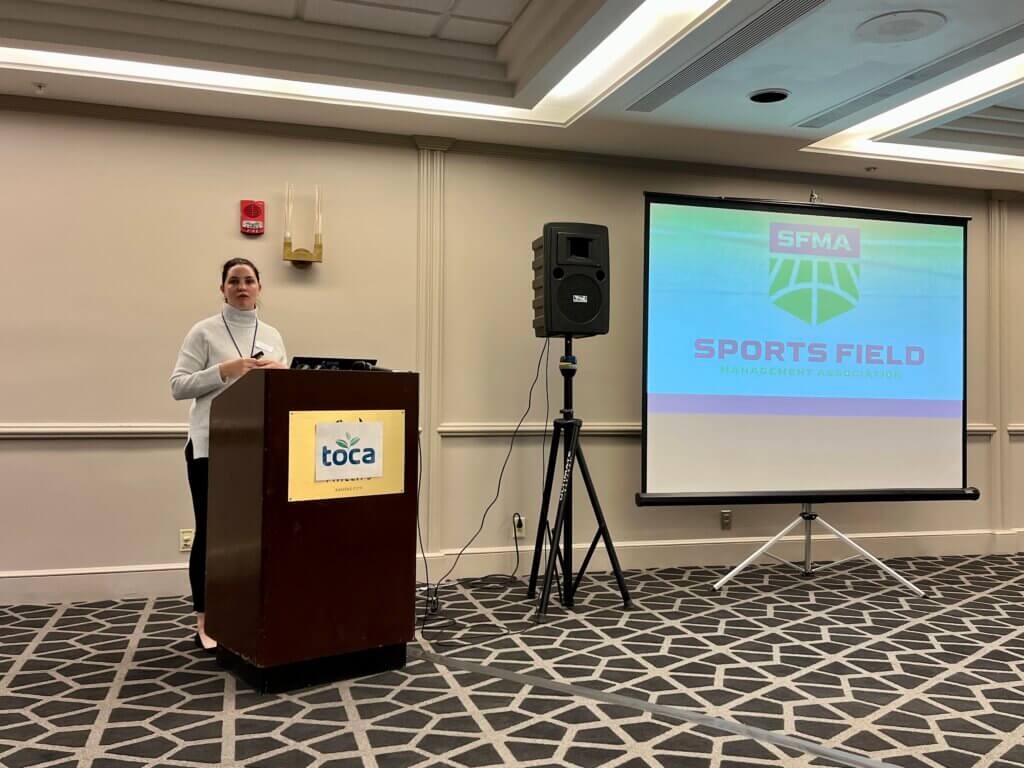
Whitney Webber
Whitney Webber is the sales and marketing manager for the Sports Field Management Association (SFMA). SFMA is a professional association for people who manage outdoor sports fields. Since its founding in 1981, SFMA has grown to more than 2,700 members.
SFMA helps sports field managers prepare beautiful and safe field surfaces. It provides a peer network for professionals to share information and best practices, learning from each other along the way. At the core of SFMA is the goal of using scientifically sound maintenance practices to keep fields healthy, athletes safe and the environment unharmed. The association offers opportunities for individual members and commercial companies.
Member programs include awards for the Field of the Year and Sports Field Manager of the Year. Certifications are one of the most valuable opportunities for members. Members can earn the Certified Sports Field Manager title to set themselves apart in the industry. SFMA also offers an Environmental Facility Certification to distinguish facilities that use environmental best practices. The association recently published an environmental best management practices guide to help facilities become more sustainable.
Continuing education is another valuable resource for members. The annual SFMA conference and exhibition hosts around 1,600 attendees who network and grow their industry knowledge. The conference will be in Salt Lake City, next January. In addition to in-person events, The Institute is a digital “knowledge center” that houses webinars, educational bulletins and training programs.
SFMA prioritizes the education of future sports field leaders by offering grants through its SAFE Foundation. Additionally, SFMA created a Sports Field Management 101 course designed to prepare high school students for a career in the industry.
Programs specific to commercial companies include the Innovative Awards and conference sponsorship opportunities. A new option is to sponsor a virtual facility tour, in which a company showcases a customer’s facility in a virtual format. Other opportunities include retargeting and advertising via web or social media.
Shelia Finney, Golf Course Superintendents Association of America
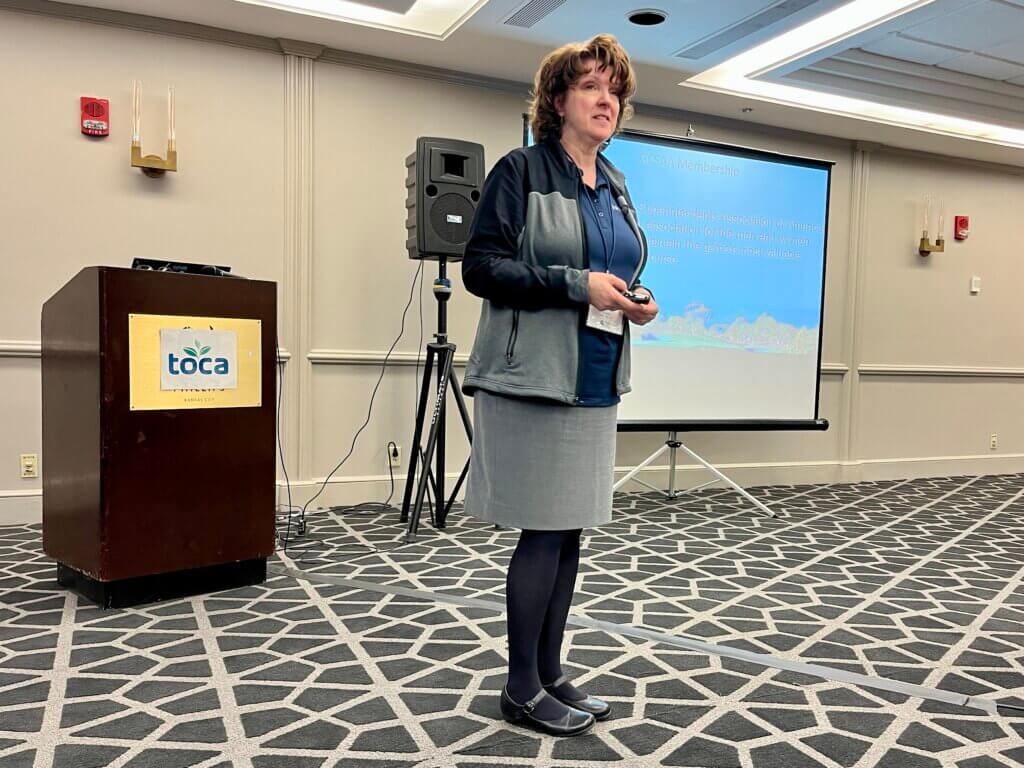
Shelia Finney
Shelia Finney is the senior director in member programs for the Golf Course Superintendents Association of America (GCSAA). She has been a member of GCSAA for 32 years, with 25 years of experience as a superintendent in Tennessee. Finney described GCSAA as a professional association “for everybody who works on the golf course.” The association’s membership, which exceeds 19,000, includes superintendents, assistant superintendents, equipment managers, other course crew, general managers, students and vendors. GCSAA represents members in 78 countries.
The association is all about connection – helping members connect to development opportunities, industry representatives and information. To achieve that goal, GSCAA uses various communication channels.
A newer offering is the GCSAA Now mobile app, which uses geofencing to connect members to others in their area. GCSAA also publishes the Golf Course Management magazine in print and online. The magazine has become a staple for superintendents and their crews. Another media outlet is the GCSAA Podcast, which connects members to relevant industry content in audio form.
Professional development is core to GCSAA, with a certificate series and monthly webinars. Members also enjoy the benefits of the GCSAA affinity program, receiving discounts on goods and services, such as tires and rental cars. Another valuable resource for members is the best management practices manual, which is unique to each state’s regulations and customizable to each golf course.
GCSAA also has a government advocacy arm that works to protect golf courses from legislation that would hurt their business. The program provides information to help grassroots ambassadors connect with their legislators and lobby for legislation that benefits golf courses.
GCSAA offers scholarships and grants to support members and those pursuing a career in the industry. Grants are available to help superintendents attend the GCSAA Conference and Trade Show, as well as other GCSAA events. The Rounds for Research program is a golf auction that helps local chapters raise money for research and education in their state. GCSAA also hosts the Collegiate Turf Bowl Competition at its annual conference and trade show.
To connect with younger students, GCSAA launched the First Green program, which is a STEM (science, technology, engineering and math) education field trip to a golf course. The superintendent collaborates with the teacher to connect a classroom concept to the course. Ultimately, the program introduces students to golf course management careers.
Ladies Leading Turf is a group for women in the industry to connect and learn together. It is open to women in any position in the industry. GCSAA also has 24 task forces that work on initiatives throughout the association, including a Diversity, Equity and Inclusion Advisory Council.
All GCSAA programs are open to sponsorship from industry partners. Finney ended her presentation by comparing an association membership with a gym membership, saying, “If you don’t go, it ain’t gonna happen.” Membership is only as valuable to members as they make it by taking advantage of everything the association offers.
Panel discussion: Print journalism is not dead!
By Erin Wunderlich
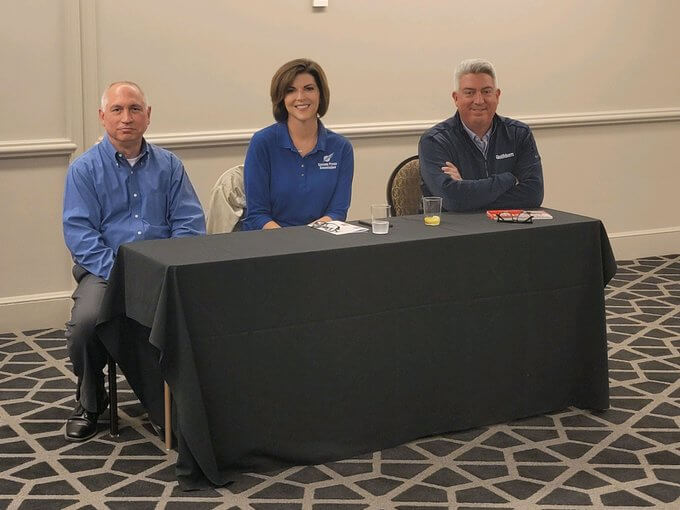
Pictured L to R: Brian Kaberline, Emily Bradbury and Seth Jones
Instead of picking up the Sunday newspaper from the front driveway, people are logging onto Twitter.
In our ever-growing society, technology is expanding to create new forms of communication that connect people from all corners of the world. Social media, blogs and forum websites are platforms where people consume their daily news.
Journalism industry experts reassured listeners that print journalism is far from gone during the “Print Journalism is Not Dead!” panel discussion at the 2022 TOCA Annual Meeting in Kansas City, Mo.
Panelists Seth Jones, North Coast Media, Brian Kaberline, Kansas City Business Journal, and Emily Bradbury, Kansas Press Association, shared their thoughts about print and digital media.
Who’s consuming print and digital media?
According to Pew Research, more than eight in 10 U.S. adults, about 68 percent of people, get their news from a phone, tablet or computer most of the time.
Kaberline said some people look to online publications for editorials or opinion pieces, while others seek feature stories in print journalism.
The Kansas Press Association represents both print and digital newspapers in the state. What residents crave the most from print are feature and hard news stories about local businesses, people and organizations.
“What we are seeing in the industry, no doubt, is a transformation. Everything is moving toward social media and online publications. While we have a lot of obstacles, our local community papers are doing well because no one is covering local stories like we do,” said Bradbury.
So, what about young people? Bradbury said she asked a group of 17-year-olds where they consume their news. She said that students who grew up with the internet can easily determine a reliable source. They told her that social media platforms like Twitter and Facebook were unreliable sources, and they go to their local newspaper – print or digital – for real news.
Bradbury said, “It is not the young people I’m worried for when it comes to online news and media. It’s my generation and my parents’ generation I’m worried for because they don’t know the difference between reliable and false news.”
The Catch-22: Digital media and monetization
The American Preservation Journalism Act is potential legislation that looks at public goods in the journalism industry. This bill would address the issues of monetization surrounding paywalls on newspaper websites.
Many are in favor of the paywall, including Bradbury and Kaberline, as it is one of the primary ways they gain loyal subscribers and pay their journalists.
However, here is the Catch-22. If a newspaper wants to become a public good, it can’t have a paywall for its digital media because that would bar all public persons from viewing its content. But how are newspapers going to pay journalists?
Many companies that are considered public goods still use a paywall. The paywall separates the audience into two groups and therefore does not serve the public anymore.
Jones said he is not in favor of a paywall. “Why should one piece of content be worth more than another? Shouldn’t all content or news be valued the same? I feel like it’s almost unfair to my readers to do something like that.”
Print won’t be leaving anytime soon
While each panelist agreed that postal service issues, labor shortages and prices rising in our current economy are all factors that can kill print, it won’t disappear in the near future.
Kaberline said there is something about people taking their time on a Sunday morning to read the newspaper. People still want to hold a newspaper in their hands instead of endlessly scrolling on their phones to read a four-page story. Also, those who read print newspapers will come across about 80 percent more material than if they were to read digital media.
Screen fatigue is another big problem. Jones said people want a break from their screens and will look to print newspapers while drinking their morning coffee, waiting for the bus or sitting on the John.
Photos also make a big difference. Jones said they are always challenged for people’s time and attention digitally. But in print, people can physically see the time and effort it took to lay out the stories and photos.
Whether readers consume digital news or print, Jones said, “We are trying to be wherever our readers are. It’s an interesting time to be a journalist because of social media. But we’re big believers in print; you’ll always see us in your mailbox.”
Bob Kendrick shares Negro League Baseball Museum journey
By Jill Odom

Bob Kendrick
Kicking off the 33rd TOCA Annual Meeting, Bob Kendrick, president of the Negro League Baseball Museum (NLBM), shared how he went from a volunteer at the museum to its president in 2011. Over his time there, he has become a champion for the museum and the story of the Negro League.
He said the players had every right to be bitter about the way they were treated, but they did not have ill will toward others. They loved baseball so much that they were willing to endure adversity.
While America wouldn’t allow them to play Major League Baseball (MLB), the American spirit allowed the Negro League to thrive. Kendrick said the league is a celebration of the human spirit’s ability to persevere, rather than a sad story, despite it taking place during the shameful time of segregation.
Kendrick shared some of the major contributions the Negro League brought to MLB, like batting helmets, shin guards and bunt-and-runs. They also introduced night games in 1930, five years before the majors did. He said American historians didn’t view the Negro League as professional baseball and the museum tells the story the way it should be told.
“If you don’t control the pen, you don’t control the story,” Kendrick said.
He highlighted a handful of notable players in the Negro League, including Josh Gibson, Martin Dihigo, Cool Papa Bell, Satchel Paige and Buck O’Neil. O’Neil was a star player and eventually manager for the Kansas City Monarchs. He became the first Black coach in 1962 and played a major role in establishing the museum.
When Kendrick first went to volunteer, the museum was a humble, one-room office where former league players took turns paying the monthly rent. He never dreamed it would turn into a career, but he became the director of marketing in 1998 and then vice president of marketing in 2009.
He joined the National Sports Center for the Disabled-Kansas City before rejoining NLBM. In 2020, they were preparing for a year-long celebration of the league’s 100th anniversary when 30 days later COVID-19 caused all of those plans to fall apart.
Kendrick knew he couldn’t wallow in self-pity as this was a significant anniversary. On June 26, they planned a national day of recognition with a tip of the cap. However, baseball still wasn’t playing at the time.
Instead, he contacted Joe Posnanski, the author of a book on Buck O’Neil, and asked if they could do a virtual tip your cap event. It took a week to roll out “Tip Your Cap to the Negro League” and it quickly became a viral campaign. Four presidents and sports icons like Michael Jordan and Magic Johnson participated in the Tip Your Cap campaign as a sign of respect to the Negro League.
Kendrick also shared how they were able to get commemorative Negro League coins minted in 2020 that could generate up to $6 million for the museum.
In 2021, Buck O’Neil was voted into the Baseball Hall of Fame and this was another major opportunity that Kendrick took advantage of to help raise money for the museum that would set it up for long-term success.
As they move forward, Kendrick said the museum’s goal is to make these stories relevant to the next generation. He wants visitors to walk away understanding how the Negro League was impactful on the country’s social advancement.
10 ways to improve your writing and editing
By Jessica Mills
Warning! “I will offend every one of you.”
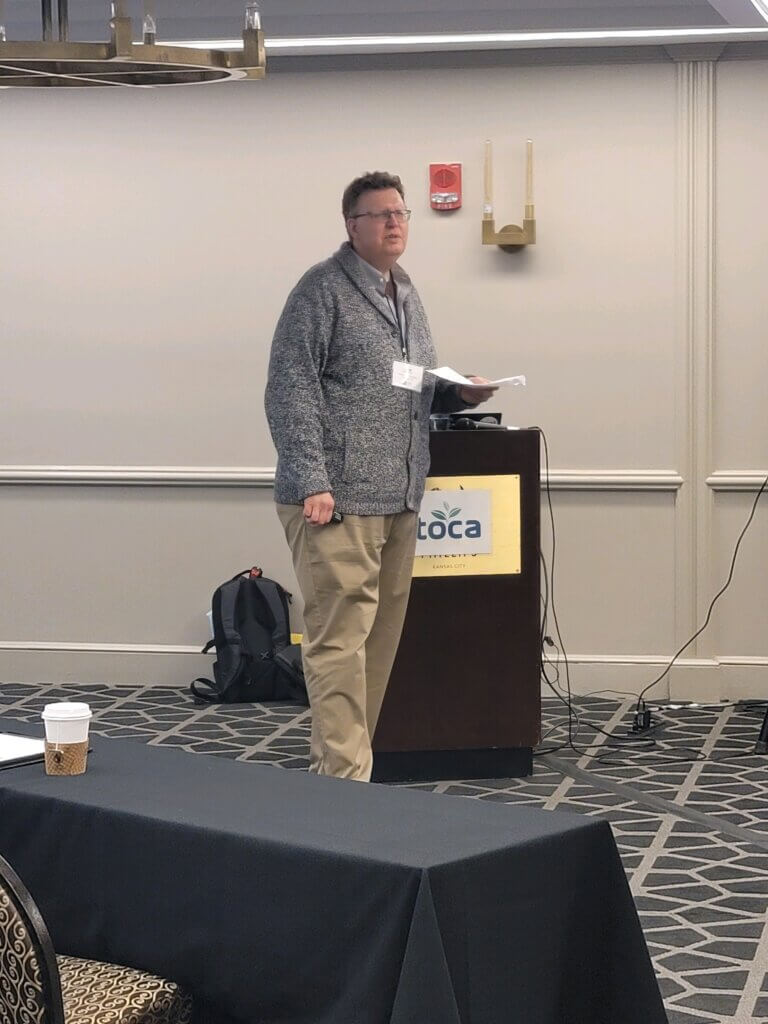
Doug Ward
Doug Ward, University of Kansas, started with this warning as he explained that he spent a lot of time on the TOCA website to find examples to use in his presentation. He stated that he did not mean to put anyone down or make fun of anyone with the examples he used. The work we produce is truly top quality. The examples in his presentation came from where he thinks we could improve. Through his teaching, he explained that it’s good to see things done poorly to raise awareness of what you should look for when writing.
Although Ward could provide hundreds of tips, he suggested 10 ways we can improve our writing and editing skills.
1. Double entendre
Watch out for words or phrases that are open to two interpretations. One of these interpretations is usually risqué or indecent. Also, beware of kerning headlines. Things can happen if you take the space out between certain letters or words.
Example: “Going Green In The Bathroom–Look What I Produced”
Example: “Thompson’s PenIs A Sword!”
2. Look it up
Recognize your areas of weakness and do your research. You immediately lose credibility if you include a mislabeled map of the state you’re writing about. Always check your spelling. For example, the term “prima donna” does not have the same meaning as “pre-Madonna.” When interviewing someone, take the time to look up where they are from and make sure it is accurate if used in an article. Someone may try and get away with “pulling your leg” and it could get printed – like the person who claimed to be from Tartarus. Tartarus is the nether region below Hell and cannot be found in the state of Kansas. A quick Google search can solve most issues if you aren’t positive about the information you’re writing.
Example: Labeling Minnesota where the state of Wisconsin is on a map
Example: “Pre-Madonna” vs. “prima donna”
Example: Tartarus, KS
3. Look again
Train your brain to look for homophones. Your brain will tell you something is wrong, but you may not know without looking at it again. You need to see what’s there, not what you think is there. Spell check will not flag these types of things. After production, you should reanalyze designs as well. Code can go missing, color waves may look different online or additional design development may change packaging, which could corrupt your original design. When cropping a photo, what you see when you look at the picture may be different than what your audience sees at a glance.
Example: TOCA ethics code: “…a serious breech of professional ethics.” (This has been changed to “breach.”)
Example: Letters missing if a flap covers the original design on the packaging
4. Beware of cliches and truisms
Cliches are not bad and Ward doesn’t forbid them. But be aware of how many you are using and how frequently you are using them. If you use them all of the time, it can become meaningless text. Move away from empty language and be specific enough that you are informing people. Truisms fall into this same category. People do not have a lot of time, so don’t waste their time by making continuous statements that are obviously true and state nothing new or interesting. Your audience will become bored and continue to swipe if you use them continuously.
Example: “We’re going to take it to the next level.” What is the next level?
Example: “The best defense is a good offense.” or “Not all fertilizers are created equal.”
Example: “Every industry is filled with challenge and opportunity, and the green industry is certainly no exception.” (Anything could replace “green industry” in this sentence.)
5. Clarity counts
You don’t want others to look at what you produce and read it wrong. Some things can make your mind race, like a sign saying to cough into your elbow. You know what it means, but it could be clearer. Coughing into your arm is much more achievable. Be sure to say what you mean and your audience will understand. Another note Ward made about clarity – be careful with too many rhyming words in a row, as they can be hard to understand when read quickly.
Example: “Never drive faster than you can see.” Well, how fast can you see?
Example: “They aren’t shy about what they think of them.” When was the last time you were shy about thinking?
Example: “Cross tine line is a tine line that…”
6. Acronyms
These can be a necessary evil. But often, we use acronyms when we don’t actually need to. Try asking yourself if you really need the acronym when writing it out. Sometimes they can be unnecessary. If you go to a website like toca.org, you probably know what TOCA stands for before going to the website. When writing a sentence that includes “Turf and Ornamental Communicators Association (TOCA)” in the middle of it, you are causing an intentional interruption in the sentence when the reader pauses to read the acronym before reading the rest of the sentence. There’s absolutely nothing wrong with that, but Ward brought up the example to ask if you actually need the acronym in the sentence. Another example was “Young Professionals (YP)” in an article. When was the last time you referred to this group as a “YP” in conversation? This thought process brings awareness to the argument of actually needing the acronym in your article. Also, when using acronyms, beware of them becoming something you don’t mean for them to stand for.
Example: Young Professionals = “YP”
Example: Wisconsin Tourism Foundation = “WTF” (This could cause problems.)
7. Legibility
Don’t let poor legibility spoil your work. There’s a trend of using a gray-colored type that’s hard to read because it’s too light. Patterned backgrounds can make text hard to read because it can get lost in the background. Hyperlinks in different colors can fade away depending on the background color. You should check for all of these things before publishing. Be careful when trying to make graphics sexy because it can detract from the information. Chunk things, bold things, bullet things and use subheads online. These practices help your readers follow along better and not bypass the information you want them to read.
Example: Blue text on a black background or white text over a light-colored image
Example: A circle graph with a golf ball in the middle of a pie chart can make the reader just look at the golf ball and not the statistics around the golf ball.
8. Double check your numbers
Be careful not to miscalculate numbers when writing. An example is the headline, “Five decades and 39 years as a head wrestling coach.” Quick math would make you assume this guy has been a head coach for 89 years! The writer was probably trying to state that he’s been a head wrestling coach for 39 years over the span of five decades. When using dates in a story and then referencing the time between the dates, make sure that the amount of time is accurate. Another rule of thumb is that when you multiply, you’re increasing. If you say something is twenty-five times less likely, now your head is spinning because “times” is “more,” but you’re talking about something that’s “less” likely.
Example: “Teen pregnancy drops significantly after the age of 25.”
Example: “Twenty-five times less likely to do the math”
9. Mind your punctuation
The headline “Hospital offers classes for spanking new grandparents” needs a hyphen, but it’s dangerous either way. Ward generally recommends using more periods. If you’re struggling with a sentence, try putting in less information. Your sentence will make more sense to your reader. Ultimately, make sure your sentence is clear and makes sense. If it doesn’t, then try using a period. They are your friend!
Example: “Hospital offers classes for spanking new grandparents.” (This should have a hyphen in “spanking-new.” A different word would also be a good choice.)
10. Look at your job as a form of golf
Ward ended his presentation with a worksheet, “Golfing with TOCA: An exercise in grammar and usage.” This worksheet provided examples Ward found in our writing. The front nine can be condensed while still maintaining the meaning and flow of the writing. Sometimes shorter isn’t always better, though. Number nine on the exercise actually added a word to make it clearer. The back nine each contained at least one punctuation, grammar, usage or phrasing problem. Can you identify how to improve these examples found here?
End-user panel: How do they use our communications?
By Dawn Rigby
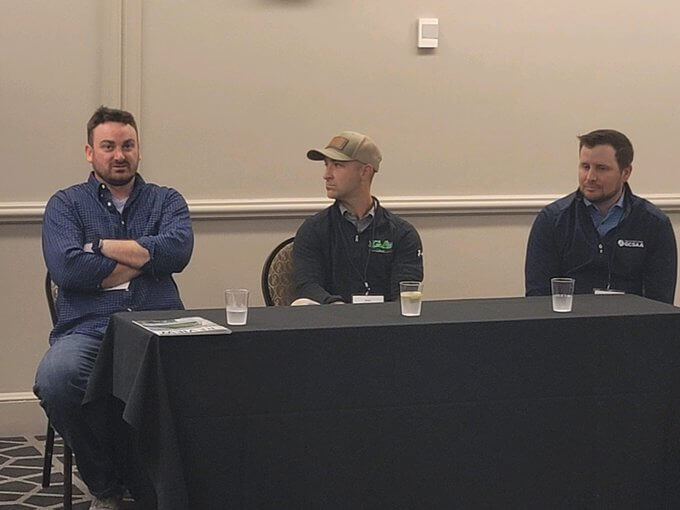
Pictured L to R: Casey Montgomery, Britt Dowd and Jonathan Bennett
TOCA meeting attendees enjoyed a unique opportunity to learn from end-users about how they consume our content. The panel discussion touched on various communication forms, including social media, podcasts, association publications, magazines, vendor relationships and industry events. Panelists shared their content preferences, how they prefer to learn about new products, and what time of year they consume the most content.
The panelists included Casey Montgomery, director of turf operations for Sporting Kansas City, Britt Dowd, founder of Green Again Lawn, and Jonathan Bennett, golf course superintendent at Sunflower Hills Golf Course.
How would you describe your habits for consuming industry-related media?
All the panelists mentioned social media, but each had his preferred platform. Montgomery shared that he preferred peer-to-peer communication over reading magazines, and Twitter was his social media platform of choice. Bennett said he uses Facebook groups, Instagram and TikTok. For Dowd, Instagram has provided a way to network with other lawn care professionals who aren’t local competitors. On social media, peers are willing to share advice, discuss new products and help each other solve problems.
Podcasts were Dowd’s favorite way to catch up on industry information. He pointed out that lawn care professionals often wear headphones while performing their jobs, making audio content easiest to consume. Dowd recommended industry communicators produce more content in audio form. He even started his own podcast to interview other business owners.
When it comes to print media, Bennett said his consumption was seasonal. They have more downtime on the golf course from December to February, and that is when they read magazines.
Although they don’t always have time to read them, the printed media sticks around. Dowd said he keeps every magazine and Bennett shared that he still prefers paper over digital media.
What catches your eye? Are you looking for how-to stories, broader industry trends or personality profiles? What kind of content do you gravitate toward?
Bennett said he preferred reading articles that feature personal stories, career paths, behind-the-scenes interviews or biographies – especially if he knows the golf course superintendent being featured.
The other panelists shared that they enjoy content that is personal, relatable, educational and humorous.
If you’re looking for information about a new product, where’s the first place you would go?
All three panelists talked about their close relationships with vendors.
“For me, it’s all about the relationship,” said Dowd. Although he gets cold calls from other sales reps claiming to save him a couple of bucks per bag, Dowd is loyal to the vendor that can get him his product when he needs it and provide advice he can trust.
Bennett said he prefers to do business with the people who support his local Golf Course Superintendent Association of America chapter.
What advice do you have for green industry communicators trying to sell to you?
Dowd suggested doing more interview-style content and more podcast and audio format.
Montgomery recommended expanding the target audience beyond the sports field manager or director. “Make an effort to reach the younger generation.” Assistants and crew members are the future decision-makers, and they are eager to learn.
To reach that younger audience, including assistant superintendents eager to move up, Bennett suggested featuring personal interviews with successful people sharing their career paths.